
Find your next study spot at UW Tacoma
An overview of the resources and study locations available for UW Tacoma students on campus.
By Rylee Morrow
As midterms approach, the need to have a good study spot becomes crucial. UW Tacoma offers several different spaces for students to study, whether you’re by yourself or in a group. Every location will be different, so use this guide to find the one that best suits your needs!
Reservable Study Rooms:
UW Tacoma has several spaces around campus that are reservable. So, if you know that you have something that requires lots of focus, book one of these in advance! Private rooms are available in the Snoqualmie Building (SNO), and semi-private rooms are available throughout Tacoma Paper & Stationery (TPS) and Cherry Parks (CP).
For bigger groups, reserve a breakout or conference room. These are available in Birmingham Hay & Seed (BHS), CP, Dougan (DOU), Milgard (MLG), McDonald Smith (MDS), the Science Building (SCI) and at the University YMCA (UWY).
You can find specific locations and reservation instructions on the Use of University Facilities website. Please note that rooms in SNO use a separate reservation process that can be found on the Library website.
Tutoring and Resources:
For those who are looking for extra help while studying, UW Tacoma has several resources. On the second floor of SNO is the Quantitative Tutoring Center. They offer drop-in tutoring for all STEM majors.
The second floor of the Tioga Library Building (TLB) has both the Writing Center and peer success mentors. The Writing Center is open to all students and staff for feedback on written assignments from the writing tutors. Tutoring is appointment based, but walk ins are welcome. Appointments can be made on the Tutoring Center homepage.
Peer Success Mentors are also available in the Writing Center. Cara Hale is the Program Support Supervisor for the tutoring center. She said that she created the Peer Success Mentor program to help students with the “soft skills of learning”.
“You go to class, you learn your content and a tutor helps you with that content.” Hale said. “But the tutor doesn’t necessarily explain good ways to study.” That’s where the Peer Success mentors come in. They work individually with students to help them develop the best ways for them to study. This is not just for students who are struggling, but anyone who wants to optimize their study habits.
While every student will have different ways of studying that work for them, Hale listed her top two study tips that she gives to students: quizzing themselves and teaching the concepts to others. She says to do as much as possible from memory before relying on notes.
Hale also noted that the Writing Space is a great space to study, regardless of whether you have a tutoring session scheduled. “We’ve got cozy booths, lots of tables, nice lighting and a tea station.” Hale said.
Public Study Spaces:
For those who are not looking for tutoring or to book a room in advance, campus has plenty of public spots that suit several different needs.
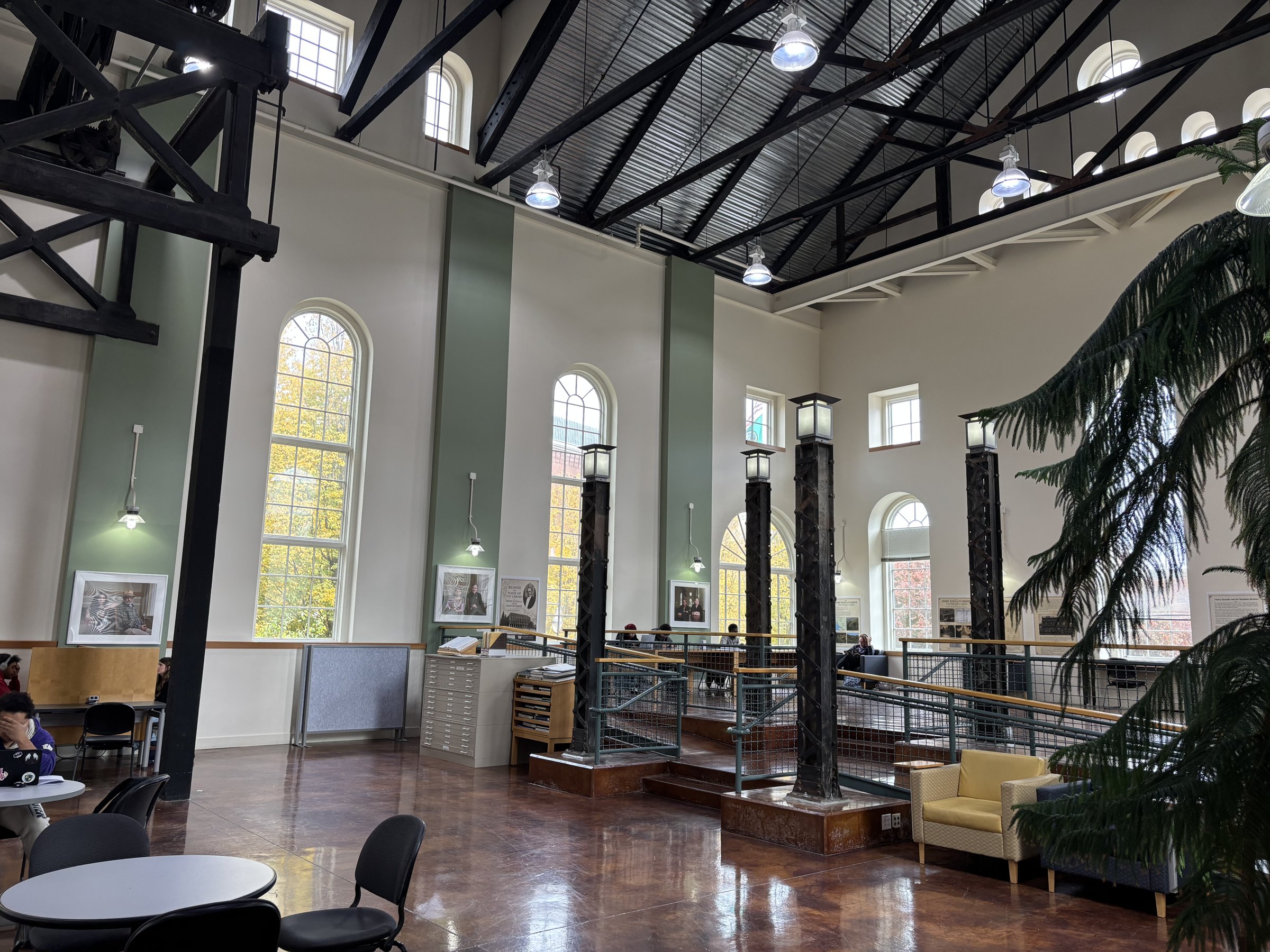
There are several quiet spaces that allow for studying with limited distractions. Floors one, two and four of TLB have dedicated quiet zones. SNO contains both the Powerhouse and Chihuly room for independent study but be aware that there are non-quiet spaces nearby, so noise may carry over.
Additionally, TLB houses the Sensory Friendly space in room 115. This is open Tuesday-Thursday from 4 p.m. to 8 p.m. and is great for those who need lower sensory input and fidget spaces. No reservation is needed, and it is open to all students.
Computer labs are available in Walsh Gardner (WG) and CP for those who need them.
If you don’t mind studying in a place where students are chatting and milling about, many of the buildings have study areas in lobbies and outside of classrooms. The Dawg House in the Mattress Factory (MAT) and Husky Commons in TPS are great resources for students, and cafes such as Starbucks, Anthem Coffee and Metro Coffee also serve as atmospheric spaces to fuel up while you study.
Campus has such a wide variety of spaces because every student has a different set of needs that must be met to set them up for success. For example, junior Lotus Hilsonroth prefers to study in spaces that don’t have harsh lighting because it makes it hard to focus. Metro Coffee tends to be her go-to place when she needs to study.
Meanwhile, sophomore Kalia Stokes needs spaces that are quiet and secluded. While the Husky Commons is a typical study spot for many students, as it houses the Husky Market, Stokes finds it to be distracting. “I will get up and talk to everybody, and I will distract myself.” Stokes said. She found that the lobby area on the second floor of Walsh Gardner (WG) is quiet and secluded enough to get her work done.
Hale said that while she emphasizes to students that they should reduce distractions, that does not always mean a quiet room by themselves. “Some people need the white noise of the people studying around them. Some people need a coffee shop with lots of noise to actually force themselves to focus. Some people need that quiet, completely dead, silent space.” She said.
Studying is one of the key parts to succeeding in class. While it may take some trial and error, explore all the available options until you find the one that works best for you.


