
UWT classes ask students for their thoughts on AI
TCORE 104 and TCOM 221 survey asks students for their opinion on AI both on and off campus
By Blake Latta
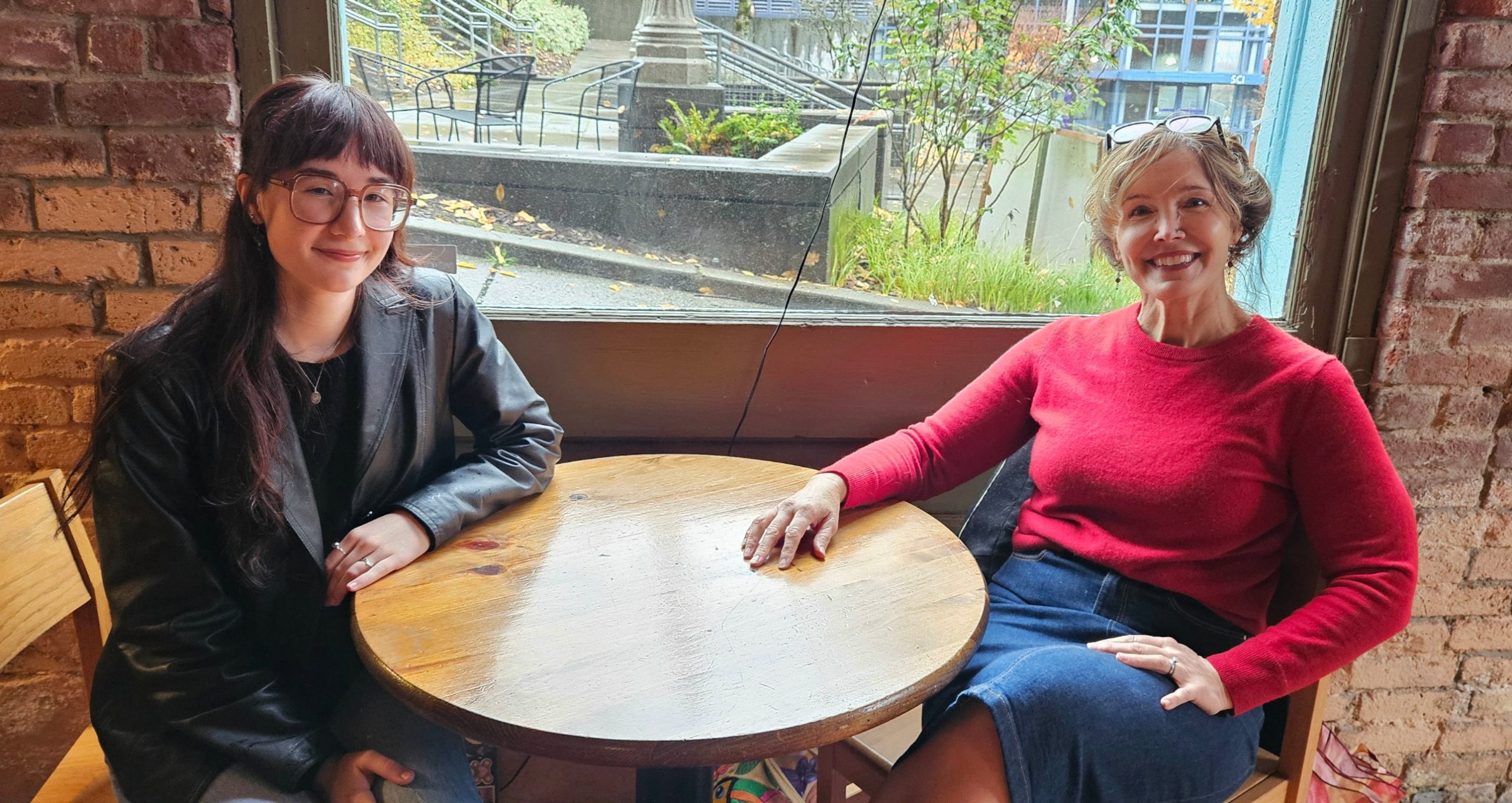
Artificial Intelligence (AI) is everywhere. Whether you are a fan of it or completely against it, the conversation around it is inescapable. Dr. Ellen Moore, a professor within the School of Interdisciplinary Arts and Sciences (IAS) here at UW Tacoma, is aiming to educate students on AI.
This quarter, Moore is teaching two classes about AI, TCORE 104 “AI Know What You Did Last Summer” and TCOM 221, “AI: Media, Culture, and Power.” The classes aren’t looking at how to use AI better but teach students how AI affects the world around us. Whether that be environmentally, socially or politically. “It teaches them how to approach AI, if they’re going to use it in the future, more critically and with more knowledge.” Moore said.
Within both of these classes, Moore and her students created a survey to take a look at what UW Tacoma students think about AI. This survey and the questions were crafted by both classes together. “They added in questions I wouldn’t have thought about,” Moore said. “They were the ones that got me thinking how to ask questions about the problems of AI.”
Moore says this survey gathered almost 250 responses. With the survey now closed, Moore explained that the initial results are roughly what she expected. The results of the survey show an overall dislike of AI and the effects it is going to have in the future. “Students are worried about future careers,” said Moore. “They think it’s going to impact their job chances negatively. So, that’s sobering.” Moore says that students are most worried about cognitive impact, creativity, and environmental effects that come from the usage of AI.
Job chances aren’t the only thing students are worried about according to the initial results of the survey. Khaira Ibrahim, a freshman at UW Tacoma, says that she thinks there is a gap between students and professors’ stances on AI.
“I would say I’m pretty neutral about AI. I do use it, but not frequently.” Ibrahim said. “I think AI can be useful, only if you put your thoughts into it first instead of it thinking for you.” One of the concerns Ibrahim mentioned the class is looking at is whether AI should be able to write your essays for you.
When discussing what constitutes abuse of AI, Ibrahim thinks abuse of AI is copying and pasting assignments into an AI model and not putting any of your thoughts and feelings into the prompt.
Ibrahim hopes the data they get from this survey helps professors and students understand one another with their AI usage and become more aligned with their usage.
Stycie Wewaru, a sophomore at UWT, isn’t a fan of AI. “I don’t like AI.” Wewaru explained. “In terms of ruining creativity and thinking, I feel like once you get super dependent on it, your brain starts to become mush.”
Wewaru said that they’ve gone over some of the initial results of the survey in class. “We found most students think it’s ok if they use AI for brainstorming or writing an outline, but they don’t think it’s ok for a professor to use it for writing a recommendation letter.” Ibrahim also mentioned that this was a major talking point within TCORE 104.
Dahyron Kim, a senior at UWT, said “as a writing major, I have my reservations about using it,” Kim says she only uses AI when instructed within the class, but does not use any AI models outside of TCOM 221.
AI is already affecting Kim’s job opportunities. “My side job is a content creator, so it [TCOM 221] gave me more insight on who interacts with my content and who could be fake or real.”
She creates gaming content online, and AI has become a large factor for her side-job. “I’ve been getting a lot of collaboration emails, and a lot of them are AI focused,” Kim said. “I can tell a lot of these emails are AI written as well.”
With the survey now closed, Moore says that these survey results will be serving as a pilot study, and she has applied for a grant to get additional funding for her research into AI. She added that she will be meeting with ASUWT leadership to present the initial results of the survey and utilize the data to come up with a plan to figure out student’s opinions on AI at UW Tacoma. These findings will then be presented to the Executive Vice Chancellor for Academic Affairs (EVCAA), Dr. Andrew Harris.


