“House of Guinness” shines light on Irish history
Guinness wasn’t always loved, but it’s now been canonized as a part of Irish culture and identity.
By Ella Walken
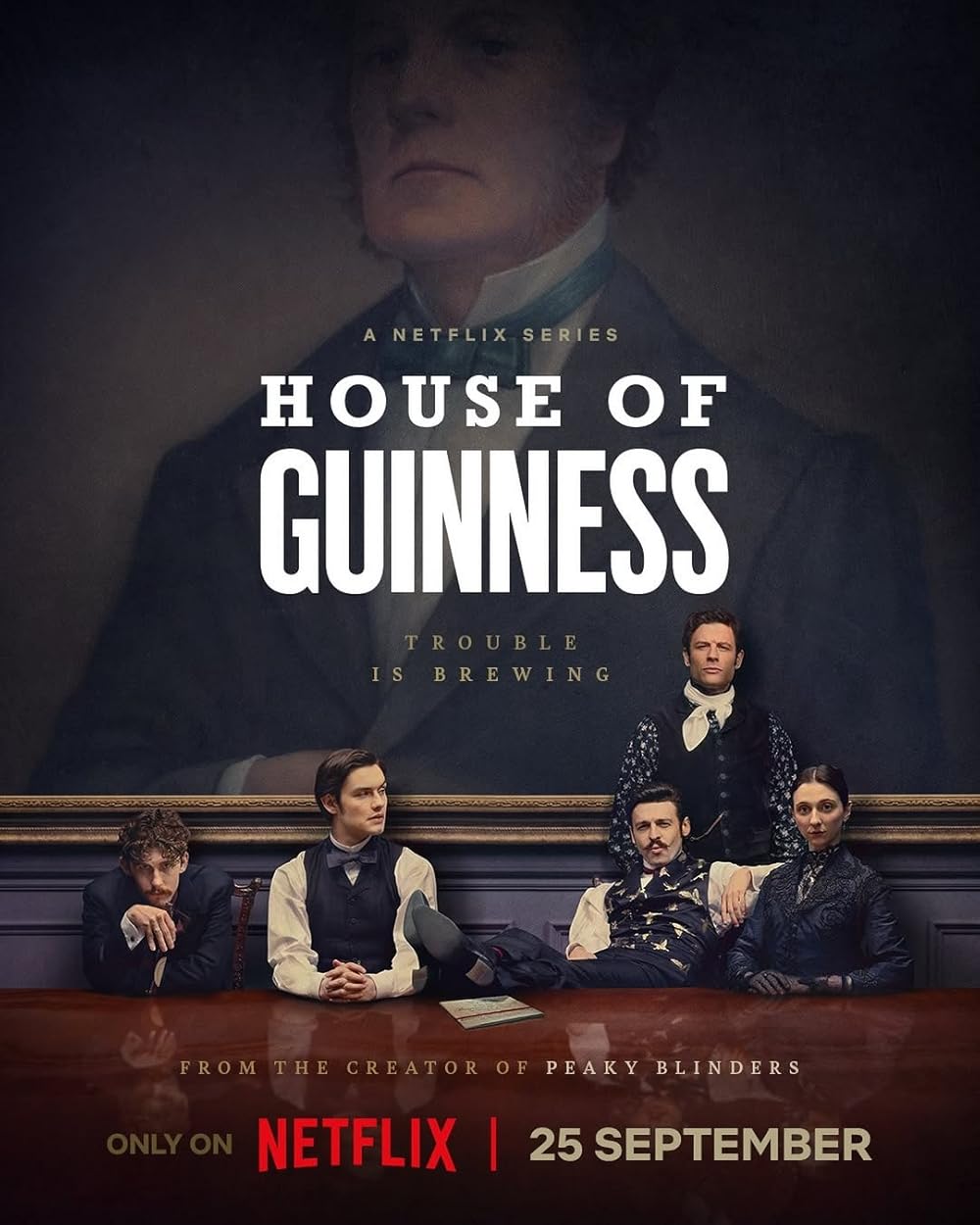
These days, the Guinness brand and its beer are almost universally beloved and considered to be a cornerstone of modern Irish culture. This positive perception wasn’t always the case, as explored by Netflix mini series “House of Guinness”, created by Stephen Knight.
“House of Guinness” situates itself in a period of Irish political history which is often overlooked. The events of the series in the mid to late 19th century fall between An Gota Mór, otherwise known as the Irish Potato Famine, and the Easter rising of 1916.
After Benjamin Guinness, the patriarch of the still young Guinness empire passes away, his children lie, cheat, and steal in order to inherit his power. The story illustrates an ugly moment in the history of a now beloved brand.
The series blends raucous comedy and intense drama, employing lush camera work by Nicolaj Bruel (Dogman 2018) and Joe Saade (Joyland 2022) to create an immersive view into Dublin of the 1860s. Even when the material lacks precision, the cast of mostly Irish actors dig into their parts with gusto, truly selling the viewer on the chaotic and privileged lives the siblings lead.
While the acting and cinematography are riveting, it’s hard not to think of a recent smash hit series which also follows a family in disarray while attempting to acquire an ailing patriarch’s power, HBO’s “Succession.” The existence of one piece of storytelling certainly doesn’t lessen the value of another, but the two shows share an undeniable amount of DNA that brings the weaker aspects of “House of Guinness” to the forefront.
“Succession” followed four siblings in their quest to take over their father’s multi-billion dollar media empire. The cast of characters included a sexually promiscuous and repressed brother as well as a sister who initially tries to lead with a moral compass.
These descriptions could all be copied and pasted onto the main characters in “House of Guinness.” It’s not just the subject matter, but the portrayal of the Guinness family themselves that makes the unfortunate comparisons inevitable.
Where “Succession” managed to unveil harrowing truths about the quest for power, “House of Guinness” can never seem to truly communicate one thesis, idea or tone. This flailing, however, is occasionally entertaining.
Within the first ten minutes of the series, songs by Kneecap and Fontaines D.C. appear, tying the Ireland of the past with modern day Ireland. Although this provides entertainment, the artistic indecision ultimately reduces the potential impact that such a historically heavy series could have.
Moments of clever comedy can never truly sing and scenes addressing the apocalyptic nature of the famine don’t land as they could due to the mismatched tonal shifts. “House of Guinness” feels like it is selling itself short by refusing to truly commit to being about anything.
Despite its frequent lack of focus, the series is highly watchable and entertaining, perfect for a weekend binge. It’s also a welcome exploration into a transformative yet under-discussed moment in Irish history. It’s easy to focus on times of extreme suffering or triumph, but “House of Guinness” asks us to ponder what happens in the in-between of history.
After a decades long lull in globally recognized political Irish news due to the peace process in Northern Ireland, the political identity of Ireland has taken front stage for the first time in years. Many young Irish artists have become increasingly vocal about Irish solidarity with oppressed peoples globally, namely Kneecap who have taken the world by storm with their Irish language political rap.
Kneecap and artists with similar Irish republican views have helped to bring about a small reconning on the island and in the diaspora. Although the peace process in Northern Ireland has been successful in many regards, many Irish people, particularly Catholics, do not feel satisfied with Britain’s control over their country.
Those who believe in a united Ireland would refer to themselves as nationalists, or as Kneecap describes themselves, Irish republicans. Kneecap and other musicians ask us to again re-evaluate Britain’s place in Ireland and its history. Could it be time for the Brits to leave and make way for a United Ireland?
With an Irish presidential election on the horizon, the question of a united Ireland has come to the forefront of many discussions on the Emerald Isle.
Frontrunner, Catherine Connolly has been vocal in her support for uniting the 32 counties. Connolly has referred to Irish reunification as a “forgone conclusion” and believes the Irish government must prepare for a true republic.
This question of reunification brings up tremendous hope as well as undeniable centuries of turmoil and trauma. “House of Guinness” is just one of many pieces of media which has exposed its viewers to the historical complexities of Irish history.