
How advisors can help you choose a major
Students at UW Tacoma may have trouble choosing from all the majors. This article may be a useful resource.
By Kai Lee
Many undergraduate students at UW Tacoma try to plan ahead, but might still struggle to choose a major that fits them best.
Planning ahead is crucial to students’ futures, said Kiko Salas, a First Year & Pre-Major academic advisor at UW Tacoma, in an email interview.
He added that planning ahead doesn’t mean students have to “have their entire lives figured out before choosing a major,” Salas said in an email. “Quite the opposite. Exploration is part of the process. Take introductory courses, talk with faculty and advisors, learn about different academic and career pathways, and give yourself permission to discover that your interests may change.”
Engineering Majors
The School of Engineering and Technology (SET) has many majors, two of which are Computer Engineering and the Civil Engineering.
According to the UW Tacoma pages for these majors, Computer Engineering teaches students how to work with hardware and software in various ways and students in Civil Engineering learn to design, construct and otherwise create infrastructure in urban environments.
To apply for either of these programs, students must have taken or be on track to complete all prerequisites by the end of summer quarter.
The engineering majors are “capacity constrained,” Noelle Wilson said, the Undergraduate Advisor/Recruiter for the SET. “So, it really is making sure you are as competitive as an applicant as possible, and that really comes down to your performance in the prerequisite courses.”
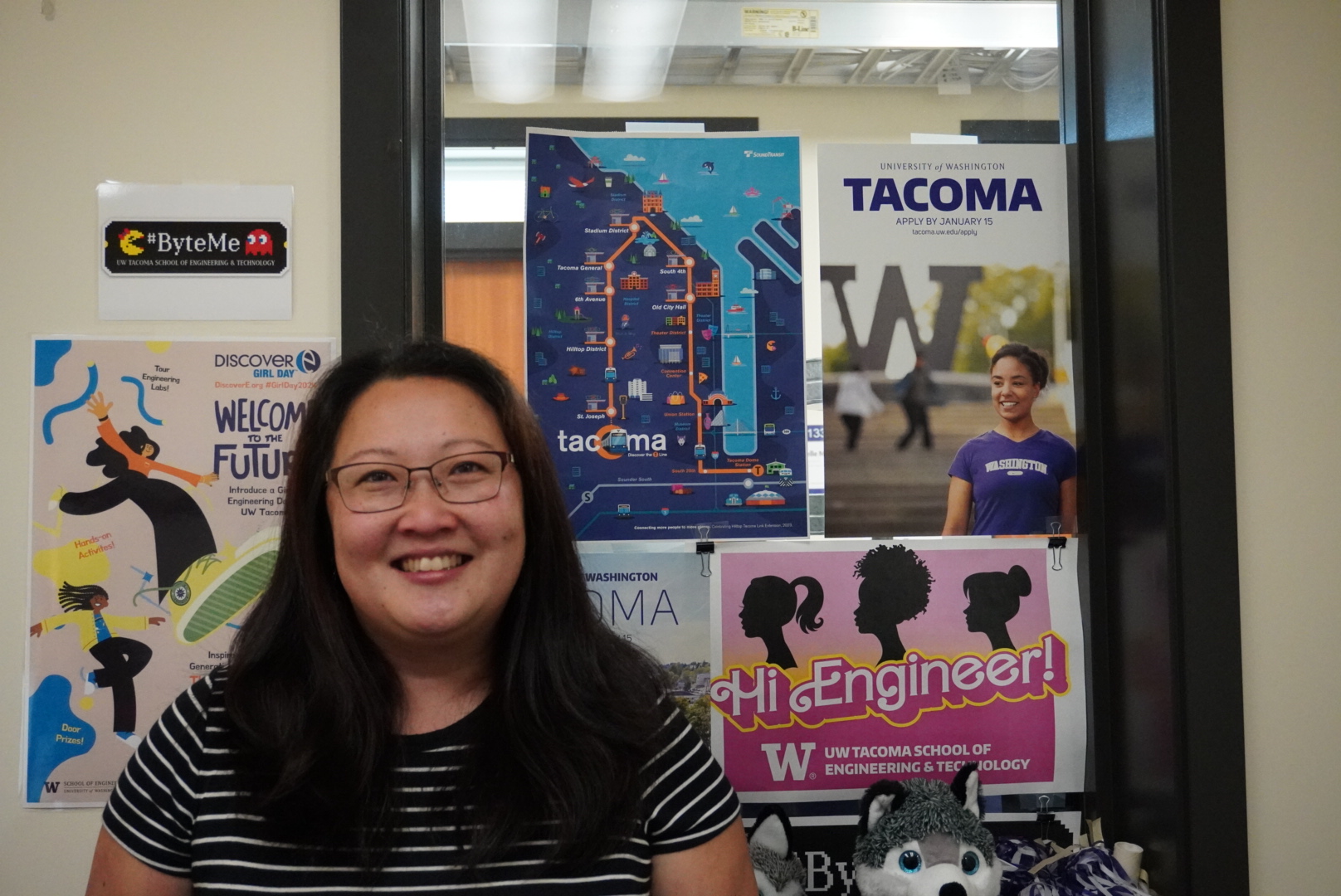
Wilson advises students interested in engineering to ask themselves, “What about engineering are they most interested in?” Wilson said. “Is it how things work electronically, how they are working robotically or how engineering works within the environment? Those are all very different areas.”
When planning ahead, students should always consider what they want to do once they graduate, where they want to work, the environment they want to work in and what type of engineering they want to work with, said Wilson.
Arts, Media & Culture Major
There are multiple tracks students can choose if they choose to declare their major in Arts, Media & Culture. There is the Literature Track, the Film and Media Track, the Visual and Performing Arts Track, the Comparative Arts Track and the American Cultures Track. Each of these tracks requires students to have at least 45 lower division credits, according to the Arts, Media & Culture Major webpage.
Business Administration Major
There are various paths to take when studying business at UW Tacoma. These include accounting, finance, management, marketing and general business, which includes the previous four in its curriculum, according to UW Tacoma’s Bachelor of Arts in Business Administration (BABA) website.
To apply, students must complete at least 60 college-level credits and complete prerequisites, including business courses and an English Composition course. More requirements can be found on BABA’s admission website. Applicants must also provide a personal statement.
“Students who come into the business school should be aware that they are going to have to do group projects,” said Danya Childs, the Assistant Director of Undergraduate Advising at Milgard School of Business. “It is not everyone’s favorite thing, but it is part of many of our required classes. It’s really helping you build skills, teamwork skills, communication skills, that would be helpful for you when you start your professional career.”
Trouble Choosing?
Regardless of the major a student wants to join, UW Tacoma has resources that can help.
Salas recommended students talk to their pre-major advisor and faculty, take the course TUNIV 250, or Husky Success Quest, and visit the Career Center to help them determine their major and guide them through the process of declaring it.
“Students don’t need to wait until they’re close to graduation to start thinking about careers,” Salas said in an email. “Exploring interests, strengths, values, possible career paths, internships, and other opportunities early in your college experience can help you make a much more informed decision about your major, Salas said in an email.


