
Letter from the editors
By Michaela Ely and MJ Cameron
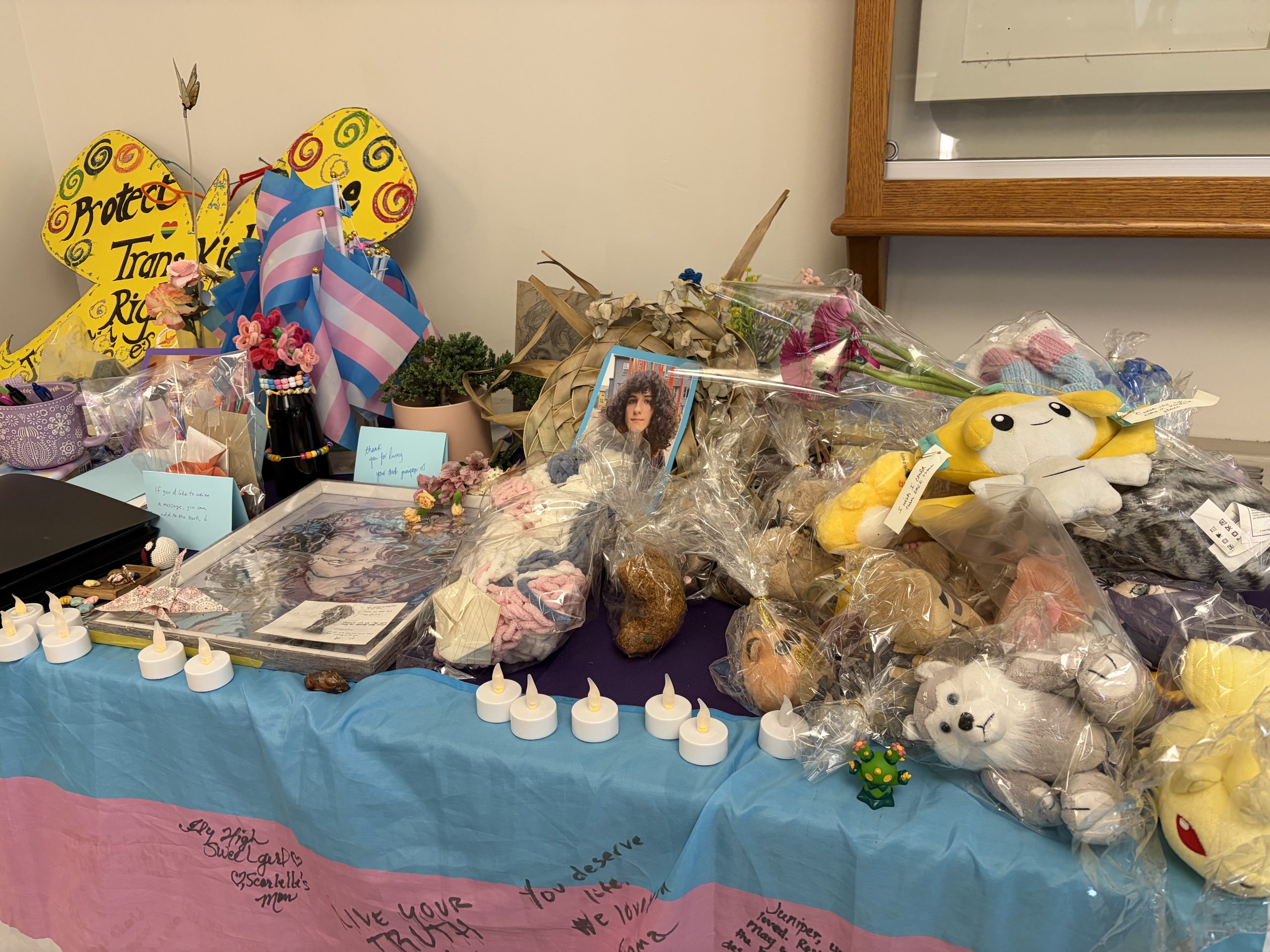
UW Seattle sophomore Juniper Blessing, a 19 year-old transgender woman, was fatally stabbed May 10 in the Nordheim Court apartments near U-Village. Since Blessing’s death, there has been an outpouring of support from campus-based and Seattle-based LGBTQIA+ organizations and the UW community as a whole. While the suspect in Blessing’s homicide, Christopher Leahy, has not been found to have targeted Blessing due to her gender identity, this tragedy has struck close to home for many members of the LGBTQIA+ community.
Managing Editor: MJ
While the suspect did not target Blessing due to being a transgender woman, it highlights the alarming rates of violence against transgender individuals. In recent years, there has been a surge of anti-LGBTQIA+ rhetoric and scrutiny. According to JAMA Network, there have been 1014 state bills, 104 federal bills and 12 executive orders introduced that aim to exclude transgender people from public life by limiting their access to education, health care, identity documents, sports and public bathrooms. These policies have made transgender people more vulnerable to violence.
According to Forbes, around 350 transgender individuals were killed in 2024 and 281 were reported murdered from October 2024 to September 2025 according to TGEU. While Washington state is known for its pro-transgender laws such as open gender affirming care, violence still happens to transgender people in the state. Certain murders include Nikki Kuhnhausen in 2019, Kenji Spurgeon in 2024 and Reyna Hernandez that same year.
As a transgender editor and reporter at The Ledger, it’s horrible to hear another transgender individual be a victim to violence and death. Regardless of Leahy’s motives, violence against women in general has skyrocketed, whether it’s physical, sexual or psychological according to Emory Rollins School of Health. While it’s hard with the current administration we’re living in now, there needs to be better community protection and understanding of transgender individuals. We are not harmful, insane or predators as President Donald Trump claims, we are the same human beings in the world who want to live comfortably within our own body.
While there has been support for Blessing and collective grief around her death, there has been anti-trans and conservative comments on social media in regards to her death. On a post by @highvibebrands on Instagram, one commenter mentioned how it was “good riddance.” Another post by @karinschall on Instagram has a commenter purposely misgendering her while arguing with two people about her gender identity. When online communities or public figures describe transgender people as less worthy of protection, it encourages fear, misunderstanding and further discrimination. In 2023, Brianna Ghey, a 16 year old transgender female who was murdered, faced the same support and anti-trans comments as Blessing.
What frustrates me the most is that even in death Blessing is disrespected online because of how she identifies. Not only does it make me angry at the state of the world we’re living in where transgender people and the LGBTQIA+ community can’t be themselves, but it makes me scared as a transgender person as well. Respecting transgender lives and those who have died to violence should not be treated as a political debate of biological sex and gender. Even if someone doesn’t understand what being transgender is or doesn’t support it, that doesn’t mean transgender lives aren’t equally deserving of respect. Blessing was a young student who had just started her journey in life, and it was cut short. Nobody deserves to have their life taken away from them at this age regardless of gender identity.

Editor-in-Chief: Michaela
Blessing’s death, regardless of how the suspect in her murder may have felt about transgender people, is a tragedy that has hit very close to home to members of the queer community. Transgender women in particular face higher odds of discrimination, whether that be through physical violence or verbal harassment, according to an article published in the International Journal for Equity in Health. Before a suspect was arrested by the police, many people jumped to the conclusion that Blessing was targeted due to her identity. While jumping to conclusions is often not beneficial, what does it say about us as a society if that is our immediate response?
As a feminine-presenting individual, it is difficult to live in a world where you have to be constantly vigilant and aware of your surroundings. Any violent attack against women makes this vigilance come to the surface even more because it can happen to any of us. Violence against women is embedded within our patriarchal society, and this extends to transgender people as well.
The current president has made it very clear where he stands on the rights of transgender people, and his rhetoric has been incredibly harmful, resulting in cuts to gender-affirming care and restrictions on the participation of transgender athletes in sports at all levels. His rhetoric is parroted on news outlets like FOX, and by other politicians at a local, state and federal level. Regardless of what your belief system says, transgender people are people first, and should be treated with the same dignity and respect that we should afford to all human beings.
As a member of the queer community, this tragedy has been difficult to grapple with. Seeing the hate and vitriol that people spread online about members of the queer community, even after their deaths, is incredibly hard to understand and come to terms with. Often, it feels like we are moving backwards as a society, letting fear and misunderstanding control the minds of those who spread the most hate. We are all human at the end of the day, and we would do well to remember to treat each other as such.


You must be logged in to post a comment.