
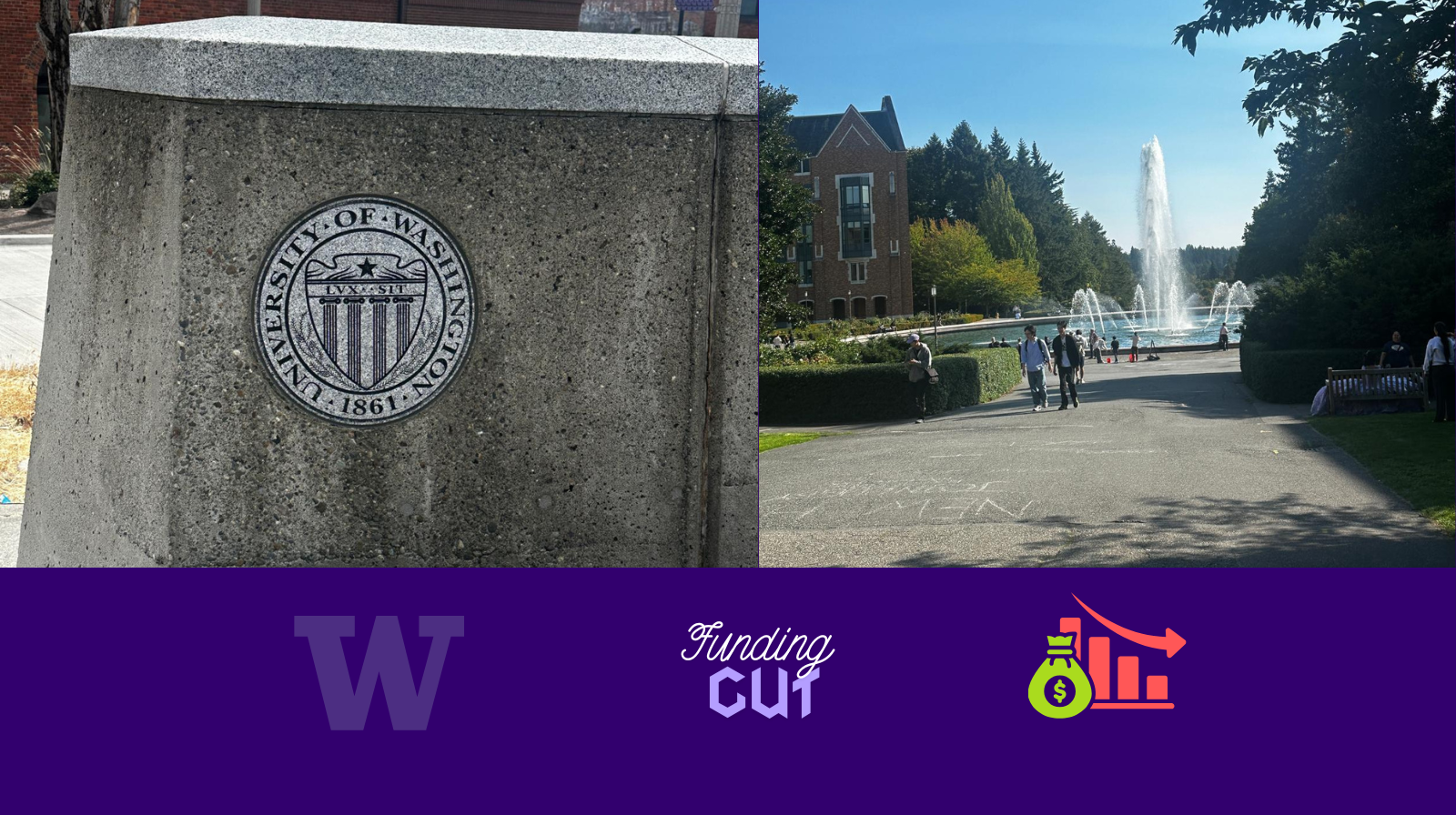
UW avoids proposed 3% state funding cut; UW Tacoma still models reductions in fiscal year 2027 budget planning
Gov. Bob Ferguson proposed a 3% cut to UW funding for FY 2027, but UW says lawmakers used a one-time, net-neutral budget shift to avoid larger reductions. UW Tacoma is still modeling 3% reduction scenarios as part of FY 2027 planning.
By Syed Huzaifa Bin Afzal
A proposed 3% reduction in state funding for the University of Washington beginning in fiscal year 2027 is no longer expected to result in a net loss for the university after lawmakers used a one-time budget shift to avoid larger cuts, according to UW State Relations updates. The state budget outcome has unfolded alongside UW Tacoma’s fiscal year 2027 budget planning, where campus leaders have asked units to prepare reduction proposals to plan for rising costs and uncertain revenue.
In January, Gov. Bob Ferguson proposed cutting UW base state funding by 3% beginning in fiscal year 2027, which UW budget materials estimated would total $15.8 million per year systemwide, according to the UW Finance budget brief.
Morgan Hickel, director of state relations for the University of Washington, said the Legislature’s final approach prevented more significant reductions.
“We greatly appreciate the creative approach the Legislature took to crafting their supplemental operating budget,” Hickel said. “It will help the UW sustain our ability to provide a high-quality, accessible education for our students and support Washington’s communities.”
Hickel said the final budget still included a small administrative reduction totaling $1.25 million, but that legislators used a one-time, net-neutral budget shift that avoided the larger proposed cut. He said that outcome prevented significant reductions that would have affected UW’s education, research and public service missions.
UW State Relations has described the final outcome as a net-neutral shift that avoided additional operating budget cuts beyond the administrative reduction, according to UW State Relations updates.
Even with the net-neutral outcome at the state level, UW Tacoma is continuing its internal fiscal year 2027 budget process. Sylvia James, vice chancellor for finance and administration at UW Tacoma, said the work is proactive rather than a signal that final decisions have already been made.
“This is a structured, proactive planning process, not a set of predetermined cuts or decisions that have already been made,” James said.
James said final university-level budget and hiring plan decisions are expected in late April, followed by Board of Regents action on the fiscal year 2027 operating budget in June. UW Tacoma has directed campus community members to its budget planning webpage for updates, and said more campus communications will follow once final guidance is received.
James said UW Tacoma has asked units to submit detailed proposals for a 3% reduction as a planning tool, while 5% scenarios are being modeled centrally for contingency purposes.
“This approach allows the campus to prepare for a range of potential outcomes while minimizing disruption,” James said.
James said the avoided net cut is a positive development but does not eliminate broader budget pressure. She pointed to the structure of state funding and cost growth across the university, including that state appropriations cover only part of salaries and benefit costs and therefore only part of negotiated increases, with remaining costs absorbed through tuition and other revenue sources. She also noted that the Legislature sets limits on tuition increases, which can constrain how much rising costs can be offset through tuition.
For students, James said UW Tacoma is focused on protecting core priorities such as instruction, advising and services that support student success and belonging. She said the campus is using shared governance and transparent communication to review proposals, including through the Budget Advisory Committee, which includes student representation.
James said students should expect continued planning and prioritization even if the largest state-level reduction was avoided. She said the campus is trying to minimize harm to the student experience, but that long-running cost pressures can still require tradeoffs when final budgets are set.
For students watching the process, the takeaway is twofold: the state-level proposal is no longer expected to create a net funding drop in fiscal year 2027, but UW Tacoma is still modeling reductions and cost pressures as part of its fiscal year 2027 planning. Campus leaders have encouraged students to follow updates through the budget planning site, attend campus forums and town halls when available, and engage through student government as decisions move from planning to final guidance later this spring.


