
Student led survey explores religion and worldviews on campus
A computer science major at UWT set out to learn what students think about belief, certainty and the unseen for no class credit.
By J.A. Aleman
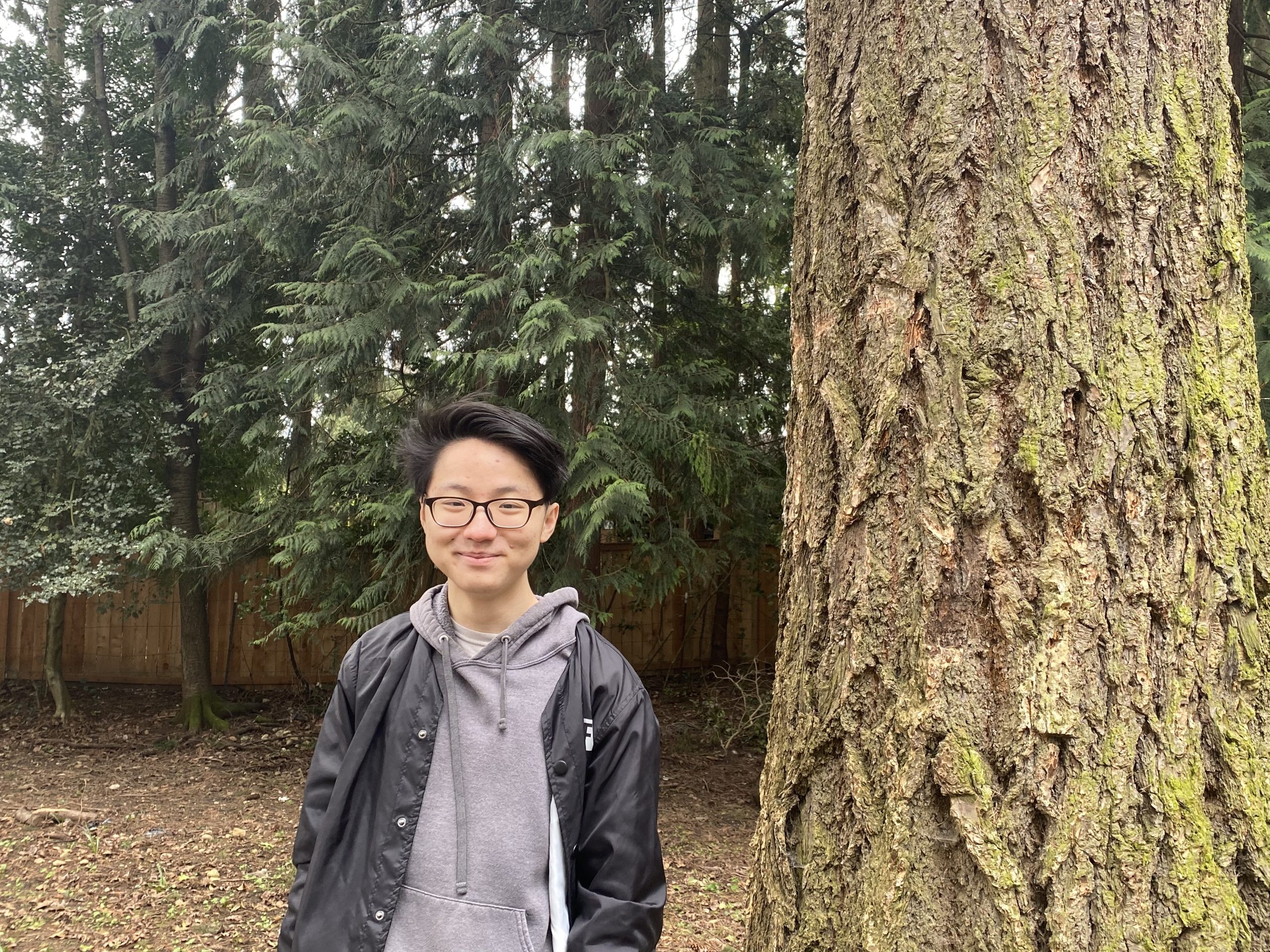
Jonathan Kim, UWT senior and computer science major, surveyed 401 students on campus and asked questions about religious affiliation and beliefs about evolution, and it wasn’t for a school project or any class.
The survey was done entirely by Kim, and the statistics revealed that there is a diversity of opinions on campus.
“I’m not sure what made me do it,” said Kim. “In computer science we spend a lot of time proving things, and we need to show certainty. For example, this algorithm will for certain run in the worst case at this speed.”
The best description of himself that Kim could give was being an agnostic, which was something he didn’t know before doing the survey or thought about and didn’t fall under any spiritual umbrella.
“I don’t think I live my life fearing a god, needed a god,” said Kim. “I know this might make people angry.”
Living like there is a god watching was interesting to Kim but didn’t have a big impact on his life and he believes he is ultimately responsible for what happens to him.
Kim was born in San Jose, California and when he was little, his parents were Christian and when he was a little older, they were into Buddhism, but they aren’t religious anymore. Kim’s grandmother frequented a temple in Korea, and his siblings are Christian and felt that push toward spirituality during the pandemic.
Being good with technology didn’t mean Kim loved computer science. In fact, he hated it before university. Security and privacy are what brought him into the realm of coding and felt that his information was too sensitive for anyone else to handle.
“The world is run on computers,” said Kim. “Once you learn how to speak with them, the possibilities are endless.”
Kim had help from Dr. Zaher Kmail, Associate Professor of Statistics at UWT for his project, saying it was conversations about certainty with his professor that nudged him forward to find out more. The survey was a personal project and took Kim three quarters to complete.
Having a professor teaching about numbers and certainty being spiritually inclined, specifically being certain, was strange to him but so was anyone who would say they are 100% certain about anything.
“This topic of certainty is interesting to me because I’m not sure if people can say that they’re completely certain about anything,” said Kim. “I don’t know if that’s achievable, like purely logically, objectively.”
Kim thought of basic questions before setting out on his project, but the main focus was the correlation between the answers and the background of each student. Answers about certainty and evolution were a plus.
The questions were specific, asking if each student believes that their personal god is real, if they believe in evolution and if they feel they can prove it. Kim noted there was a higher percentage of bio-medical students he spoke with who don’t believe in evolution as it is presented.
The survey was about finding certainty and not about finding nuances to these larger topics. This means even if these bio-medical students didn’t believe in macro evolution but believed in micro evolution and adaptations, then they would land in the camp that doesn’t believe in evolution.
“Their whole major is about biology and chemistry,” said Kim. “That’s something I wanted to know more about if I were to do more research.”
Finding how many people are religious on campus was surprising, and he thought there would be more nonreligious because Washington is a liberal state with most of the campus pursuing STEM related degrees.
According to a study done by Pew in 2023-24 about the United States religious landscape, 25% of adults in Washington are highly religious, tying New York for 37 highest among states and 44% believed in God or universal spirit with absolute certainty.
In 2022 there was nearly a 60-point gap in optimism between Democrats and Republicans in Washington state about how things were going in the state according to a survey by DHM Research. In 2025 the gap has shrunk, and the numbers could reveal that Washington is not as liberal anymore.
The demographics on Kim’s survey can be seen on a bell curve, ages ranging from 17 to 60 with the peak being people in their 20s. The Muslim community was found to be the most statistically certain about their belief in God than other religions.
Atheists were also found to be certain there is no God while Christians were more divided and though the sample size was small, Buddhists said they weren’t certain in the existence of their gods.
“I thought what was interesting was the coloration with ethnicities,” said Kim. “The African Americans and Hispanics are very similar in their confidence in God and the Caucasians, and the Asians were similar in their division. It’s anyone’s guess as to why.”
When it came to belief in evolution, the Muslim community and the Latino community were found to be similar in saying no to evolution and Whites and Asians were found to believe more in evolution.
“A common thing I heard was, I don’t like Darwinism, but I believe in adaptation or mutation,” said Kim.
What was perhaps the most shocking was the students’ willingness to participate in the survey which asks questions that are personal. Kim mentioned he could count on one hand how many times he was turned away.
Opening with less invasive questions and leading into deeper questions was a formula that helped shape the findings and invited students to share their beliefs openly and honestly, even when asking multiple people at once.
Those conversations with groups revealed the dynamics of how much people were surprised by each other’s answers.
The first people Kim asked to take the survey were twins and he was nervous because his script was not refined yet. The last person he spoke to was supposed to be 400 but ended up being 401 due to an impromptu conversation.
Based on the population of the campus, Kim decided that surveying 400 students would be enough to calculate findings that could be later interpreted by others depending on what they see.
Kim spent hours speaking with Dr. Kmail about religion and other subjects which prepared him for the conversations he had ahead of him.
“I had no expectations,” said Kim. “I learned more about people and thought that was very valuable. It’s a rich environment and if you want to do surveys do them in person because no one does online surveys unless there’s a gift card.”
Kim told the Ledger, he hoped this didn’t come off as him trying to belittle students with religious views and that there was no agenda with the survey. This was merely something that sparked his interest, and he was in a prime environment to pursue it.