With the 2026 World Cup groups set, Seattle feels closer than ever for students
With a larger field, more pathways to advance and four group-stage matches in Seattle, the tournament is no longer someday. It is something students can actually plan for.
By Syed Huzaifa Bin Afzal
The group stage is where the World Cup becomes a shared language. It is where casual viewers learn the standings, dedicated fans overanalyze tiebreakers and entire friend groups adopt a country for a month. With the 2026 FIFA World Cup group draw now finalized, that familiar rhythm is officially on the horizon, and for students in Washington, it carries an added reality; Seattle is hosting games that will shape the early storylines of the tournament.
The 2026 edition expands the tournament to 48 teams, organized into 12 groups of four. Each team plays three group matches, and the knockout phase grows to include 32 teams, not just the 16 we have been used to for decades. The top two in each group advance, along with the eight best third place teams, according to espn.com. That structure is going to change how the group stage feels; fewer dead games, more scoreboard watching and more reasons to care about matches that do not involve a traditional favorite.
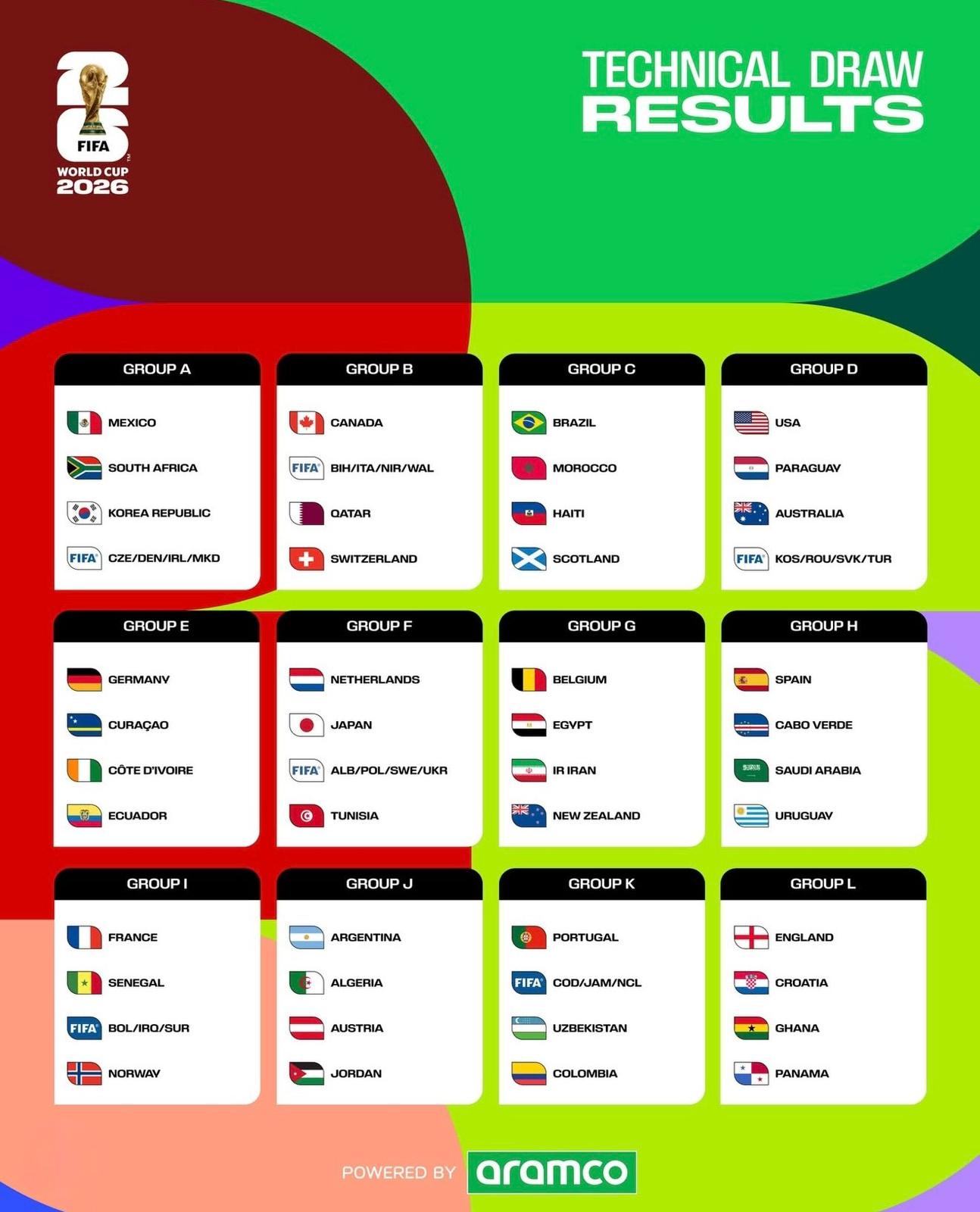
Here are the groups according to UEFA.com, listed in order:
Group A: Mexico, South Africa, Korea Republic, European Play-Off D winner (Czechia/Denmark/North Macedonia/Republic of Ireland)
Group B: Canada, European Play-Off A winner (Bosnia and Herzegovina/Italy/Northern Ireland/Wales), Qatar, Switzerland
Group C: Brazil, Morocco, Haiti, Scotland
Group D: United States, Paraguay, Australia, European Play-Off C winner (Kosovo/Romania/Slovakia/Türkiye)
Group E: Germany, Curaçao, Côte d’Ivoire, Ecuador
Group F: Netherlands, Japan, European Play-Off B winner (Albania/Poland/Sweden/Ukraine), Tunisia
Group G: Belgium, Egypt, IR Iran, New Zealand
Group H: Spain, Cabo Verde, Saudi Arabia, Uruguay
Group I: France, Senegal, FIFA Play-Off Tournament winner 2 (Bolivia/Iraq/Suriname), Norway
Group J: Argentina, Algeria, Austria, Jordan
Group K: Portugal, FIFA Play-Off Tournament winner 1 (DR Congo/Jamaica/New Caledonia), Uzbekistan, Colombia
Group L: England, Croatia, Ghana, Panama
From a student perspective, the best part of this draw is not just who plays whom; it is how many entry points there are into the tournament. If your family is from North Africa, Group J offers Algeria against Argentina and Austria. If you grew up watching European football, Group I has France and Norway in a group that could turn tense quickly. And if you simply want high-quality matchups without having to follow a single team, Group H Spain and Uruguay is set up for genuine competitive games, not just highlight reels.
Seattle’s schedule matters because it turns those groups into something you can physically experience. According to the Seattle World Cup organizing committee’s published match schedule, Lumen Field will host four group-stage matches: Belgium vs. Egypt June 15, Australia vs. USA June 19, the European Play-Off A winner vs. Qatar June 24 and Egypt vs. Iran June 26. Seattle also hosts a Round of 32 match on July 1 and a Round of 16 match on July 6 according to Seattle FIFA World Cup 26.
The match in Seattle is not just one host nation showcase match. It is multiple chances to see international football cultures in one city and that is the real-World Cup experience. Belgium brings star power. Egypt and Iran bring massive, passionate followings. Qatar brings a team that will attract attention regardless of performance. And the U.S. match on June 19 will be the one that turns Seattle into a national stage for an afternoon.
Of course, students will run into the same obstacle we always face cost. Tickets will be competitive, and a Tacoma-to-Seattle day trip is not free once you add food and time. Still, the draw offers a practical strategy; pick one match that fits your budget and commit to making it your World Cup day, then treat the rest of the tournament like a month-long campus season. Watch parties, club events and informal gatherings can deliver most of the emotion without the price tag. And if you are going to spend money, the knockout rounds in Seattle July 1 and July 6 are a strong case of one game, one result, no second chances.
The group draw did what it was supposed to do. It turned an idea into a map. It gave every student a reason to look at a schedule and say, I can be part of this. And in a year when burnout can make campus life feel repetitive, a World Cup summer in Seattle might be exactly the kind of shared moment students need not as an escape from real life, but as a reminder that the world still gathers in common spaces, for common stories and that we can gather with it.