
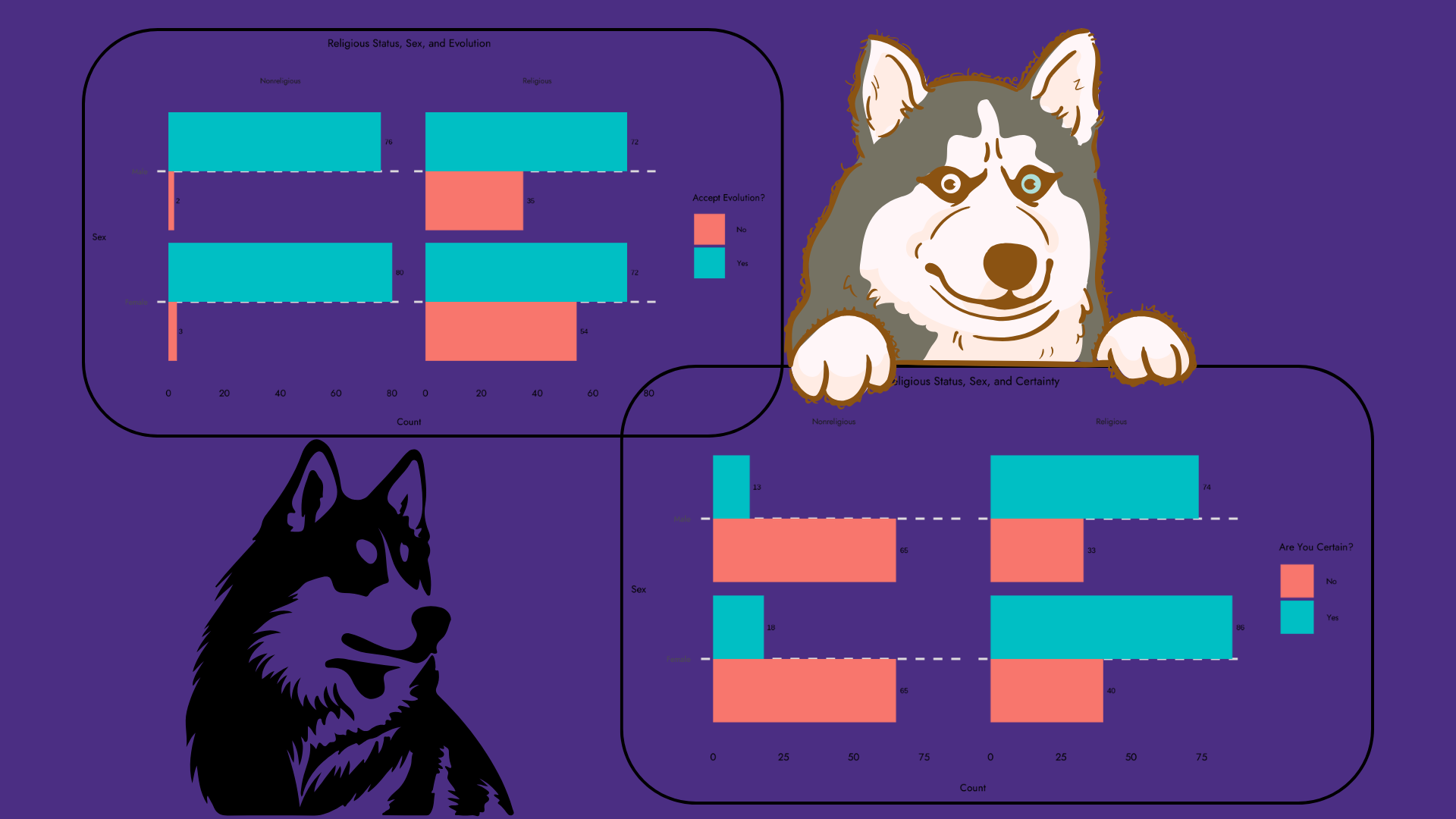
Certainty, doubt and the weight of being human
Students at UW Tacoma may differ in belief, but they are all responding to questions about life, meaning and purpose.
By J.A. Aleman
We are all trying to figure out how to live a life that means something. Everyone holds something they are certain about, whether it is belief in God, belief in science alone or belief in their own reasoning. If we push far enough underneath all of those positions, we eventually reach the same questions: Where do we come from? Why are we here? What is right and wrong? What happens after we die?
Jonathan Kim conducted a survey at UW Tacoma, which was previously covered in a spotlight article I wrote for The Ledger. The survey didn’t just reveal religious differences but showed that all of us are responding to the same search for the sacredness of life.
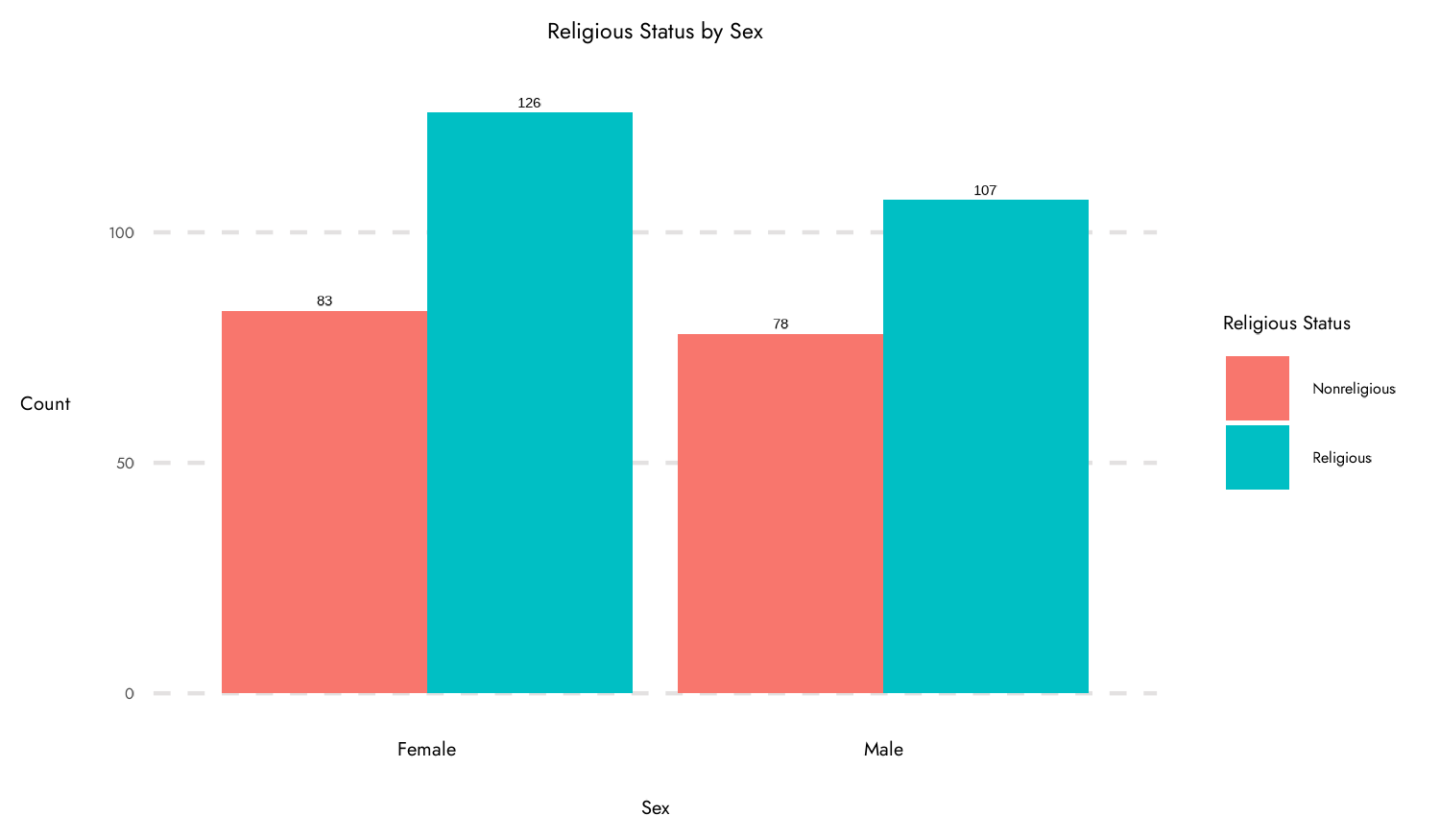
The survey showed that women were more likely to identify as religious than men, and men were more likely to identify as nonreligious. This didn’t surprise me because I grew up Christian, and I grew up in a Latino household, and in both spaces the pattern was that the women showed up.
I saw mothers bringing their children to church alone, week after week. That didn’t mean the men didn’t believe but it was what I saw. Some of them were working, providing, carrying weight the way they understood they were supposed to. But the women were the ones who carried the spiritual weight.
My mother used to tell me that your first church is your family. I took that to heart. Jesus once said you can gain the whole world and lose your soul. I believe the same can happen in a household; you can take care of the world and lose your home. That is tragic, so, when I see more women identifying as religious, I don’t just see a statistic. I see the people who refused to let the family’s spiritual life collapse.
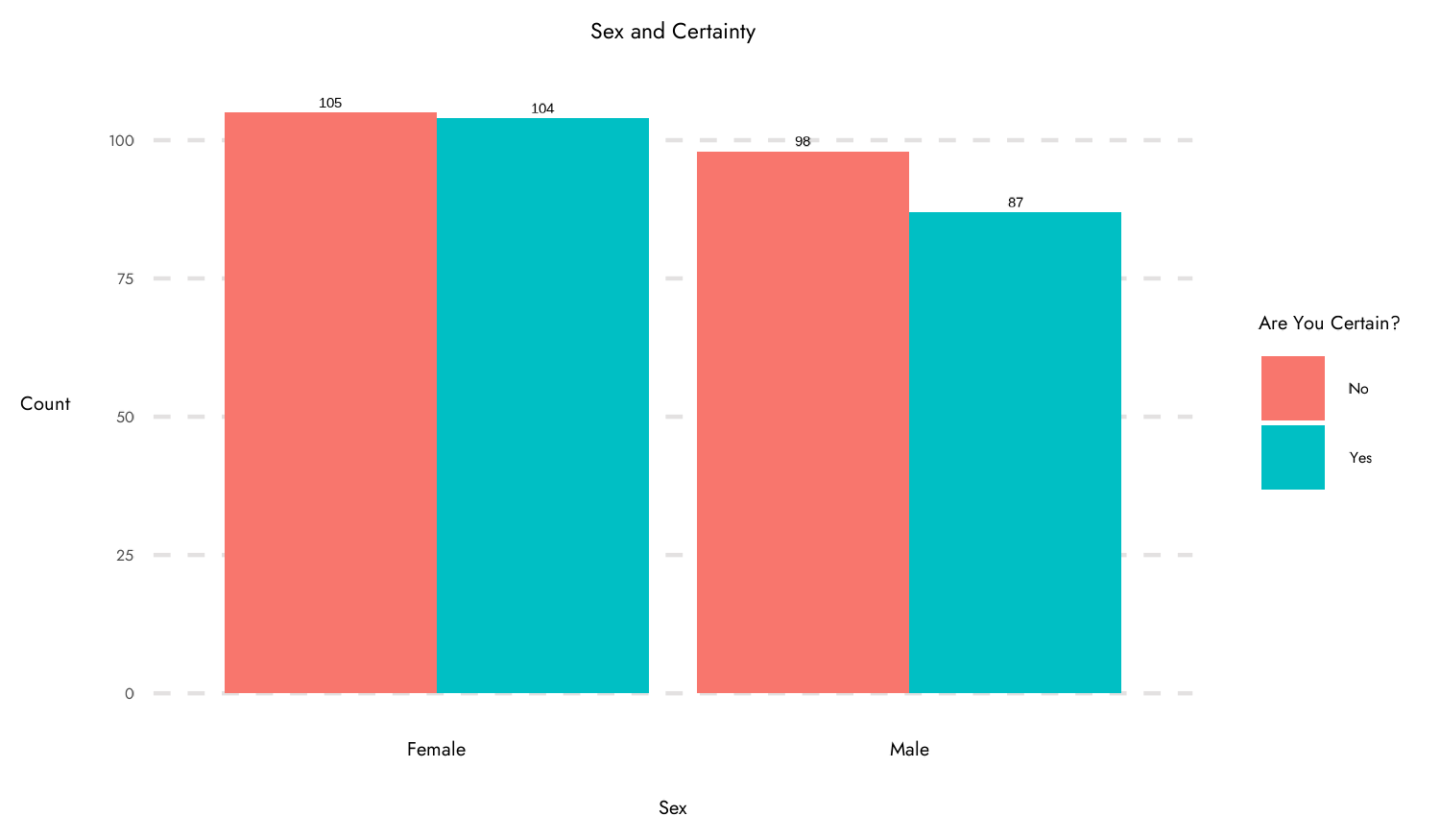
The survey also showed that men were more likely to report certainty in their beliefs, whether they believed in God or didn’t. I’m not separate from that. If someone asked me whether I believe in God, I would say yes without hesitation. My certainty isn’t loud or defensive, but it is something I have experienced and understood. It’s trust in the person of Jesus Christ.
I don’t look at certainty as arrogance. Certainty becomes a problem only when it is used to avoid thinking. Some people become certain, so they never have to question anything again. Others are certain in a way that allows them to keep questioning without losing themselves. The survey doesn’t tell us who is right but tells us that we don’t all mean the same thing when we say we’re sure.
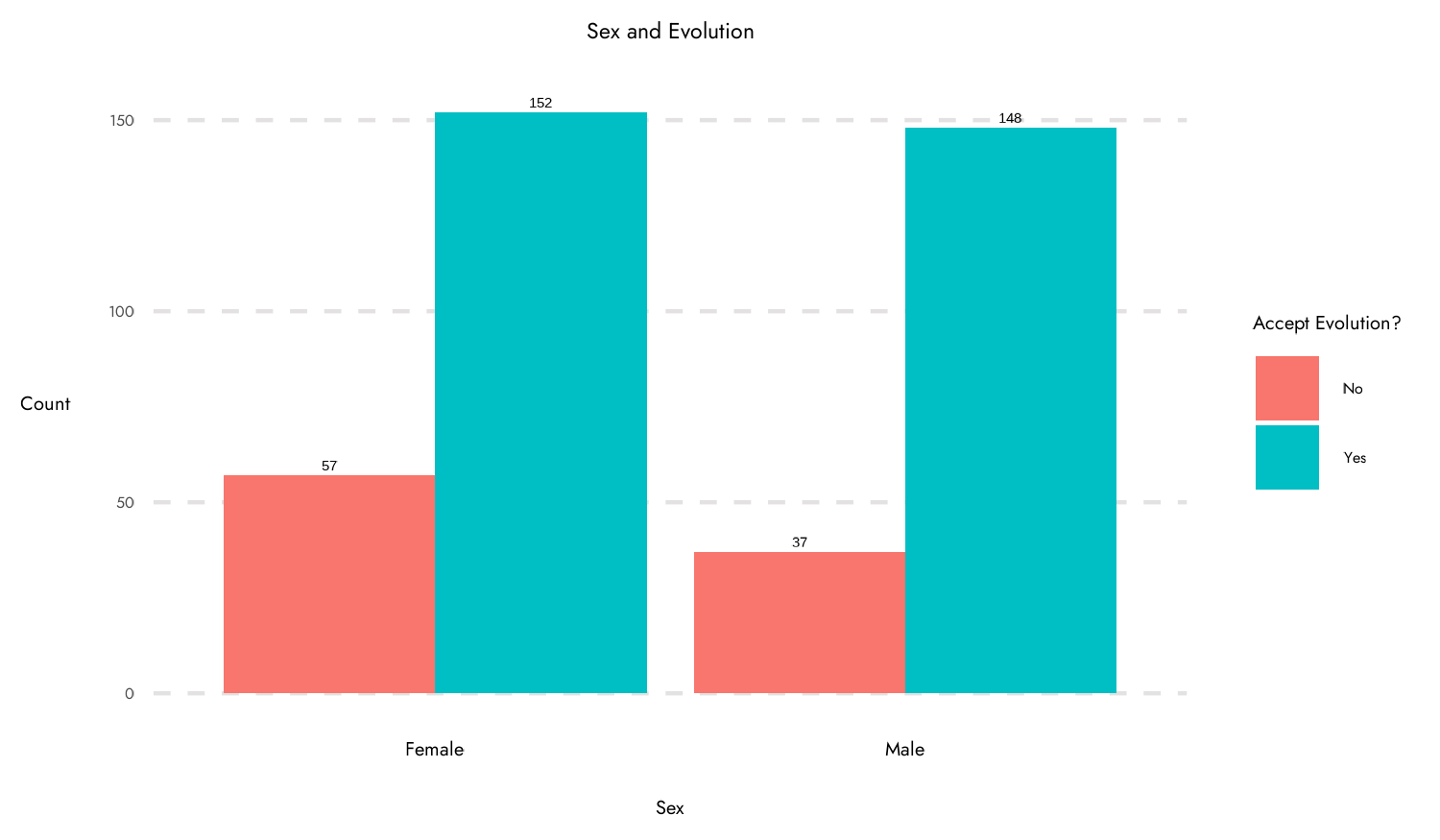
When it comes to evolution, the survey shows a division, but even that division is misunderstood. If I were taking this survey, I would have been placed in the category of “does not believe in evolution,” but that would not tell the whole truth.
I believe in adaptation or what is known as micro-evolution. What I do not believe is that one creature becomes an entirely different creature which is known as macro-evolution. The survey can’t show that difference because it only recorded yes or no, but that nuance matters.
People aren’t rejecting science but are questioning what different explanations mean. Science can explain how life functions; however, it cannot explain why life matters and the question of meaning has everything to do with the sacredness of life.
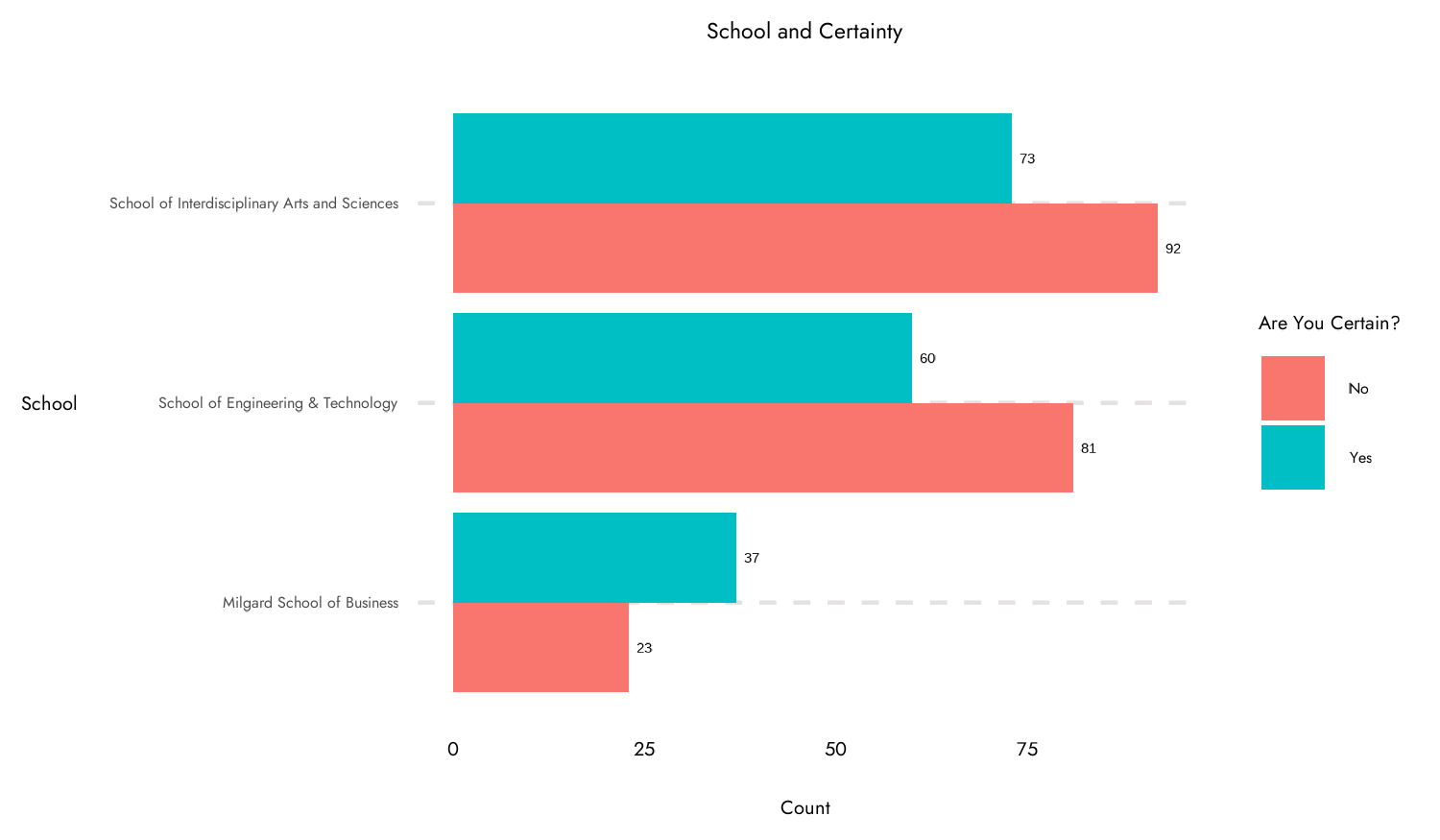
The differences by academic schools reflect this. The School of Interdisciplinary Arts & Sciences (SIAS) students had higher rates of nonreligious identity, which makes sense when your studies involve examining the world through history, culture, theory and identity. Business students had higher rates of religious identity, which aligns with communities where tradition and stability are important.
Engineering and tech students were caught in the middle, meaning they were not quick to affirm belief, but not quick to deny it either. Trained to only state what can be proven, yet aware that proof has limits when it comes to meaning. Again, none of this tells us who is right but shows that every field teaches a different way of approaching the same deep questions.
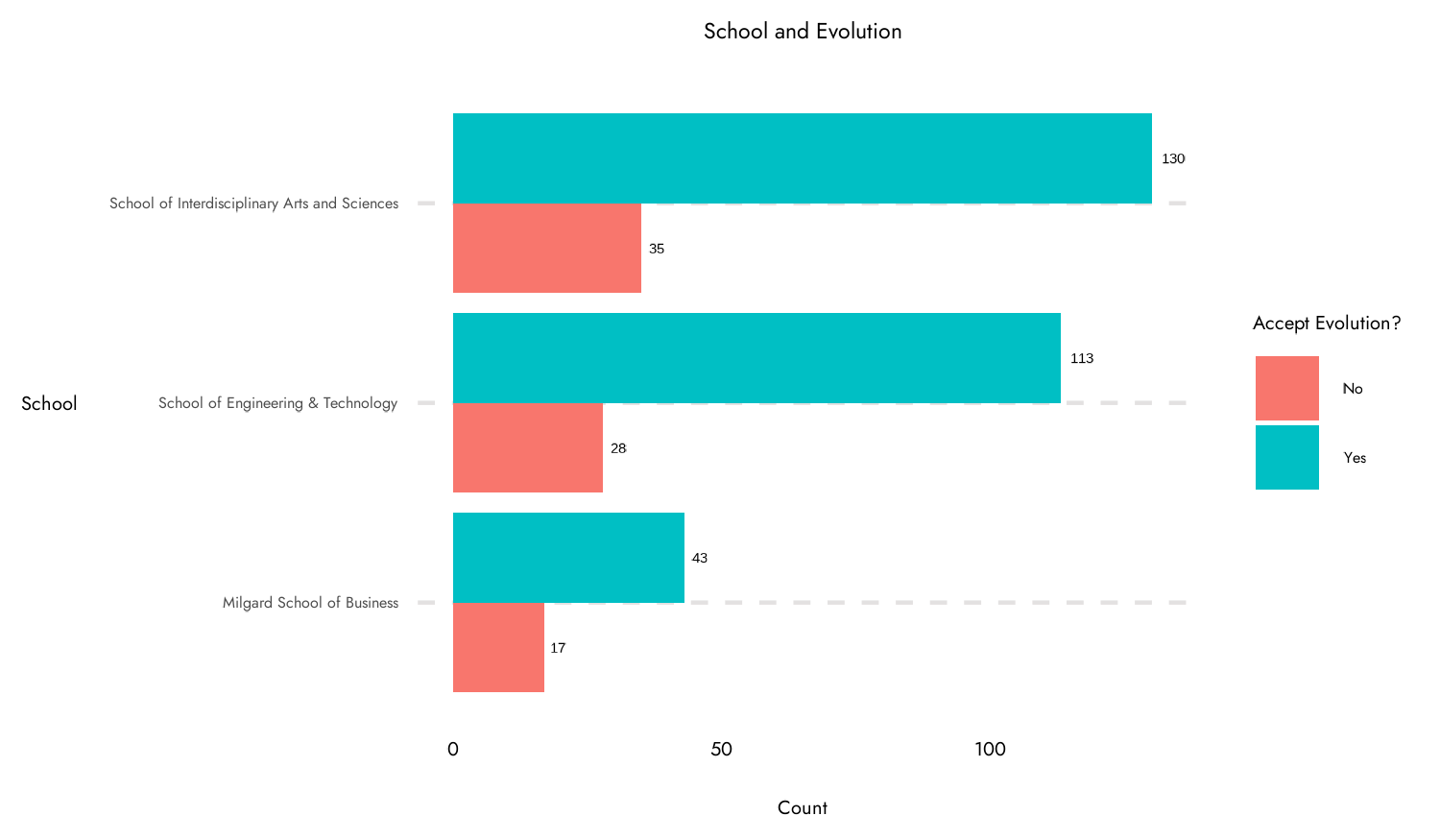
The responses to evolution by school make this even clearer. Biomedical and engineering students were more hesitant to accept macro-evolution as the explanation for the origin of life. I don’t think that’s rejection, but awareness. When you study life closely, the systems of the body, the precision of structure and life’s complexity, it becomes harder, not easier, to view life as accidental. The closer you get to life, the more sacred it becomes.
All of this brings me back to the beginning. We are all trying to figure out how to live a life that means something.
We hold certainty where we can, question where we must and we all return in our own way, to the questions that sit under everything else: Where do we come from? Why does life matter? What are we supposed to do with the short time we have?
These questions are not small by any means and how we answer them has a way of defining who we are. The survey didn’t divide us, it just revealed that we are all standing in the same search.
We don’t all believe the same things, but we are asking the same questions. Some people find their answers in God while others find it in something else. Still, the search itself is not a flaw because it is the most human thing about us.