Washington State History Museum exhibition offers look into immigrant experience
Our Voices: Stories from Washington’s Southeast Asian Refugees” paints a rich picture of the experience of migrating to Washington State.
By Ella Walken
In the wake of the devastation of the Vietnam war, millions of Southeast Asian refugees fled their homes in search of safety. Some of these refugees settled in Washington State. The current exhibition titled “Our Voices: Stories from Washington’s Southeast Asian Refugees” puts the experience of these migrants into focus, particularly the first 500 refugees who came to Camp Murray in 1975.
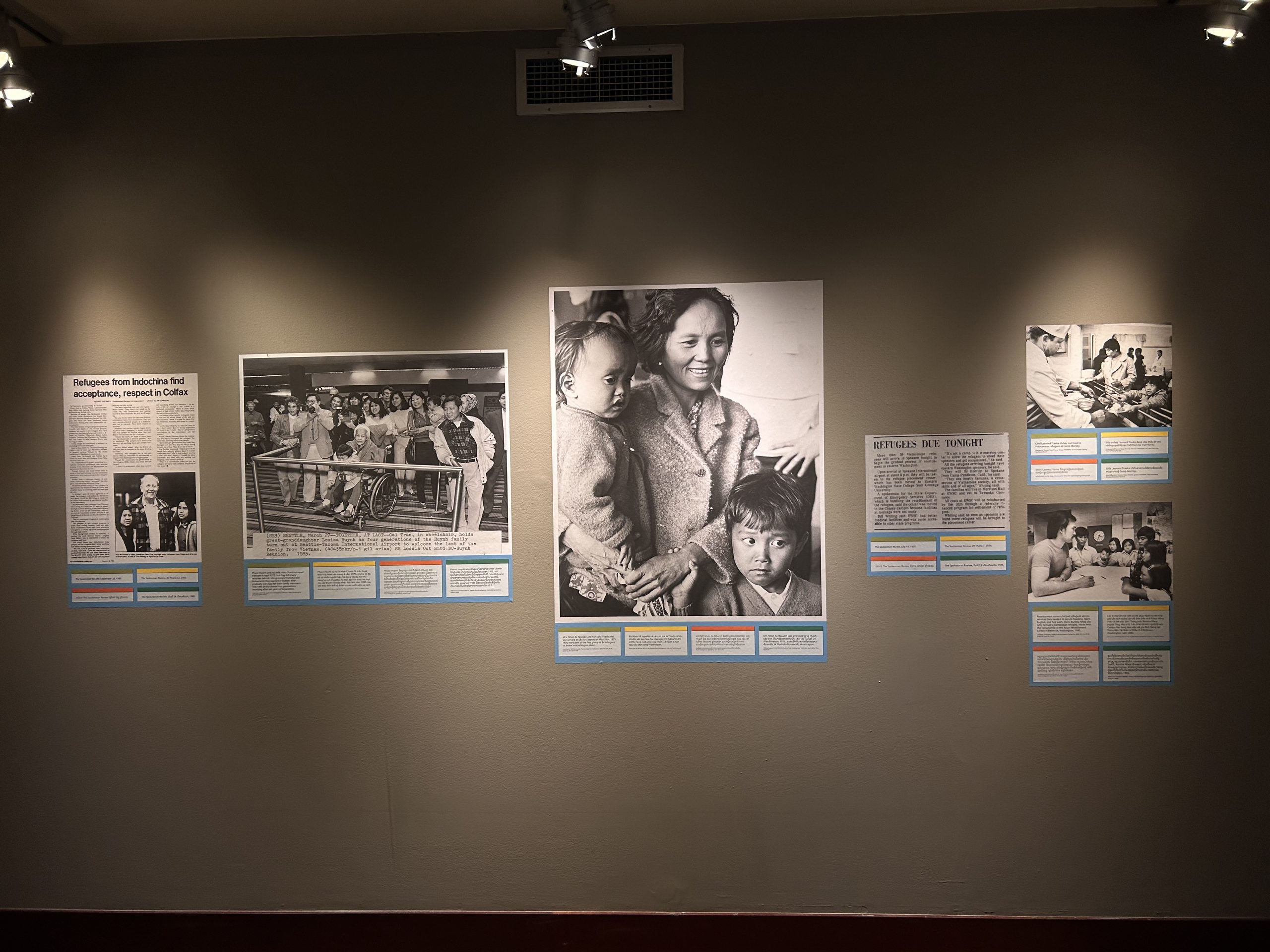
Through photography, historical documents and personal recounting of events, the exhibit paints a full, rich picture of the experience of migrating to Washington State currently.
Near the entrance of the exhibit, there is a pamphlet that lays out the timeline of conflicts and hardships that occurred in Southeast Asia during the second half of the 20th century. The timeline is both succinct and highly informative, beginning with the initial involvement of the United States in the 1950s, ranging all the way to the 1990s.
This timeline gives the visitor a baseline contextual understanding of the personal stories and images they will come to know. Immediately we are introduced to the stories of Southeast Asian migrants with a quote from Bopha Chan Sanauinetti which reads, “If it hadn’t been for the chaos of the Vietnam War, I probably wouldn’t be here. I don’t think any of us would be here. I would be in Cambodia-if I survived Pol Pot’s genocide. What do you do with chaos? You have no choice. You have to change. You have to grow…”
The quote is on a poster and communicated in English, Vietnamese, Khmer and Lao. Much of the information and testimony in the exhibit is presented in the four languages together, offering accessibility to the very communities it is highlighting. This choice to make language a key part of the exhibit also importantly reminds visitors that the United States is a multi-lingual country.
Through images of migration and accompanying text, the viewer learns about the experiences of refugees who came to the United States. One poster on the refugee experience displays an image of Washington State Commerce Director Joseph Thahn-Nguyen’s Mother, sister, and other family as “they were picked up by the Coast Guard in the South China Sea after two weeks on the water.” The choice to include this image related to a Washington state official reminds the reader just how recently these tumultuous situations took place.
In addition to written descriptions and photographs, the exhibit also features a headset which encourages visitors to listen to the materials spoken in Vietnamese, Khmer and Lao. This further immerses one into the experiences of the subjects in the exhibit.
Another wall of images illustrates what life looked like for Southeast Asian immigrants once they had migrated and built a life in Washington. The images show people at work as well as children playing in their neighborhoods and going to school. This portion of the exhibit highlights My-Linh Thai, current representative of Washington’s 41st legislative district. Rep. Thai first enrolled in Federal Way High School at 15 years old without knowing English. She now represents over 150,000 constituents in her district.
The exhibition is both highly informative and moving. The use of photographs, documents, personal accounts, and audio recordings communicates the pain and trauma of fleeing one’s home while also emphasizing the hope that it can come with building a new life.
On March 21 at the Washington State History Museum, Susan Lieu and community partners will be hosting “a full day of engaging programs inspired by the special exhibition.” The event will include storytelling, traditional games, live music, and more.