Disney’s AI partnership raises questions about creative integrity
Disney’s partnership with OpenAI reflects a broader move toward efficiency and profit at the expense of creativity.
By M.J. Cameron
On Dec. 11, the Walt Disney Co. and OpenAI have reached a three-year licensing agreement that makes Disney the first major content licensing partner for Sora. The partnership allows Sora to generate short, user-prompted videos that can be viewed and shared on Disney+. Disney will also become a major OpenAI customer, using it to develop new products, tools and experiences.
For longtime Disney fans, the announcement signals more than a new technological experiment. It reflects a continuing decline in creativity and a growing emphasis on efficiency and profit over artistic quality.
When I say I love Disney, I’m referring to the era of hand-drawn 2D animation and the studio’s early 3D films of the 2010s. Those films featured distinct art styles, expressive characters and carefully crafted worlds. Early Disney princess films carried a charm rooted in detail and intentional design. That sense of artistry is increasingly absent from the company’s recent films.
Disney’s growing reliance on live-action remakes reflects that shift. Many of these films have been widely criticized for failing to capture the emotional depth and visual beauty of their animated originals according to Enloe News.
Hand-drawn animation creates a beauty that goes beyond realism, allowing characters and environments to convey personality and emotion in ways live action often cannot. Lewis Pierce from Medium cited the 2019 live-action remake of “The Lion King” as an example of how realism can strip animation of its magic.
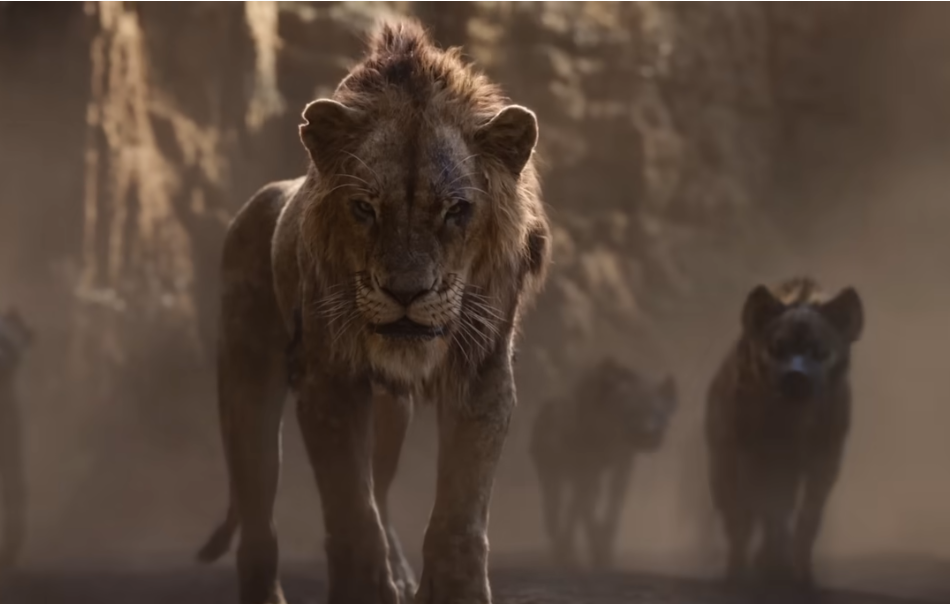
“Sure, the animals may look hyper-realistic, and the CGI might be groundbreaking,” Pierce wrote. “But to bring something into live action and attempt to make it grounded, you cannot do with an animated fairytale or tale in general, as either it loses the realism and is no longer justified.”
Not all of Disney’s live-action remakes were failures. Earlier films such as “Maleficent” and “Cinderella” demonstrated that reinterpretation could work when handled with care. However, more recent projects, such as “Snow White,” have struggled to honor their source material. The continued announcements of live-action adaptations such as “Moana” and “Tangled” suggest a strategy focused more on quantity than creative vision.
The OpenAI agreement reinforces that concern. Allowing fans to generate AI-created content using Disney characters prioritizes mass output over craftsmanship, reducing beloved characters, whether hand-drawn or portrayed by actors, to mass-produced digital renderings. Rather than advancing storytelling, the move feels like a shortcut.
AI tools still struggle with artistic fundamentals that human artists spend years mastering. Generated images often distort human anatomy, mishandle lighting and produce a glossy, artificial appearance. These flaws are especially noticeable when applied to Disney’s animated characters, whose designs rely on stylization, expression and intentional exaggeration.
As an artist, I’ve spent years studying anatomy, lighting and color theory, skills AI can’t replicate with consistency or intent. Every artist develops a unique style, a human quality that gives art its personality and emotional weight. Disney’s increasing reliance on AI does not represent innovation; it shows how the company is prioritizing profit and output at the expense of the time, talent and investment required to create the quality, original films the company was once known for.
Disney built its legacy on imagination, originality and respect for artistic craft. While technology can be a powerful tool, it should enhance creativity rather than replace it. By leaning into AI-generated content and rapid production, Disney risks further distancing itself from the artistry that once defined its films.
If the company wants to preserve its cultural significance, it must invest not just in new technology, but in the artists, time and care that made Disney stories resonate in the first place.