Lack of affordability pulls the plug on Washington’s Music Scene
The increase in the cost of living is causing difficulties to Washington’s iconic music scene. Leading to concerns about its future.
By Karla Pastrana
On October 31, one of Washington’s iconic music venues, The Crocodile publicly announced the closure of two of their additional music venues. A closure that came as a shock to the local music community revealed the harsh truth that Washington’s music industry is suffering from the high cost of living, leading it to slowly disappear.
The soon to be 35-year-old music venue that was known for hosting iconic grudge bands like Nirvana, confirmed on Halloween through an Instagram post that the information given to City Cast through anonymous employees for an article released on Oct 26 was true. That in late December two of their smaller music venues, Madame Lou’s (Madame) and comedy club/theater Here-After (HA) would be closing.
Although the smaller branches of the historical venue will be closing permanently, The Crocodile venue which is the main and The Crocodile Hotel will remain open. Allowing The Crocodile’s team to focus on maintaining the main venue open and accomplishing the core mission of delivering a world-class venue for all and specifically for uplifting artists.
Yet the negative impact of the loss marks a major setback to the venue for it had moved from its original location in Belltown in 2020 to its current location that promised to expand the venue to host more artists thanks to Madame capacity being 300 and HA 100. A move that had many causes that led to it, but the biggest being the pressure of residential development looming over their original block in Belltown.
Same development project led to the closure of Tula’s Jazz Club back in 2019 thanks to the lack of affordability growing in Seattle according to Earshot Jazz.
Once again, the lack of affordability is reflected in the latest development with The Crocodile. In an interview with The Stranger, The Crocodile’s creative director Hunter Motto told that there is many reasons why the two venues are closing but the main ones are an increase in the price of goods, operations and insurance. Along with a weak economy and decrease in food and drink sales although the venues hosted 1000 events in 2024.
To save the smaller venue branches of The Crocodile, Motto investigated increasing tickets prices, obtaining sponsors, staffing changes and hosting more private events, but none of those options resolved the lack of affordability. An issue caused by the rise in the cost of living in Washington state, something that the Washington Nightlife Music Association (WANMA) 2025 music census had found to be the main component to the disappearing music culture in Washington.
WANMA, a nonprofit organization that was formed in 2020 by music venues and clubs to sustain the local music scene across the state released the music census on Oct. 6 in hopes to show the policy makers the negative impact the music industry is facing thanks to the increased cost of living.
The census asked 742 musicians, 255 business owners, and 586 industry workers for 6 weeks on what the economical contributions, workforce characteristics, and needs of the state’s music composition, production and performance ecosystem for policy workers.
What they found is that the state’s live art scene’s future is uncertain even though it provides the state’s GDP with $6.4 billion making it one of the economic powerhouses of the state that employs 49,200 people directly and supports 74,700 jobs in Washington. Making it six times more profitable than the sport sector that only provides $1.2 billion, according to The Stranger.
The uncertainty comes from the fact Washingtonian artists only get 29% of their income, which has caused 40% of artists to consider relocating out of state or out of major cities like Seattle thanks to the rise in the cost-of-living. Especially those within the industry who identify as independent contractors which prevent them from participating in certain unemployment and financial assistance programs.
To make matters worse, many freelancers within the music scene rely on local non-profit art organizations to find work but with the governmental funding cuts many organizations can’t support them as strongly as before, according to Earshot Jazz Magazine editor Rayna Mathis. Without community organizations many will struggle to grow career wise and find employment.
Like many music lovers in Washington, Mathis has seen the impact of the cost of living impacting the jazz community. A community with a rich history within the state and home of many jazz legends like Quincy Jones and Ray Charles.
“I have seen many venues close and not have a viable path forward. These are small venues that contribute to the community and if they’re backed up against a wall they can’t get out off, we lose a community space. There isn’t enough city or government support to help them,” Mathis told The Ledger.
Mathis highlights the importance of community space by recalling how the Seattle Jazz scene welcomed her when she first moved to Seattle back in 2014. Community spaces like music venues help people make connections and find their passions which help prevent loneliness. And music is one of the biggest contributors in creating community.
With the lack of support, the music scene has felt the full blow of the rise of living which has caused many things within the music industry to increase. According to WANMA since the pandemic, the music scene has seen a 7% increase in infrastructure firms and 25% for live venues to host events along with a 30% increase in payrolls.
Leading ticket sales jumped insanely high; what was once $13 is now $24. Additionally, with the cost-of-living rising above 9% the national average which has caused Washington to appear in the top 10 most expensive states to live in.
The rise in prices has made it difficult for the community to support artists and for artists to make a living. Making the uncertain future of the music scene even more unstable for workers within it. Real Art Tacoma (RAT) is one of the many venues in the state currently fighting against the uncertain future.
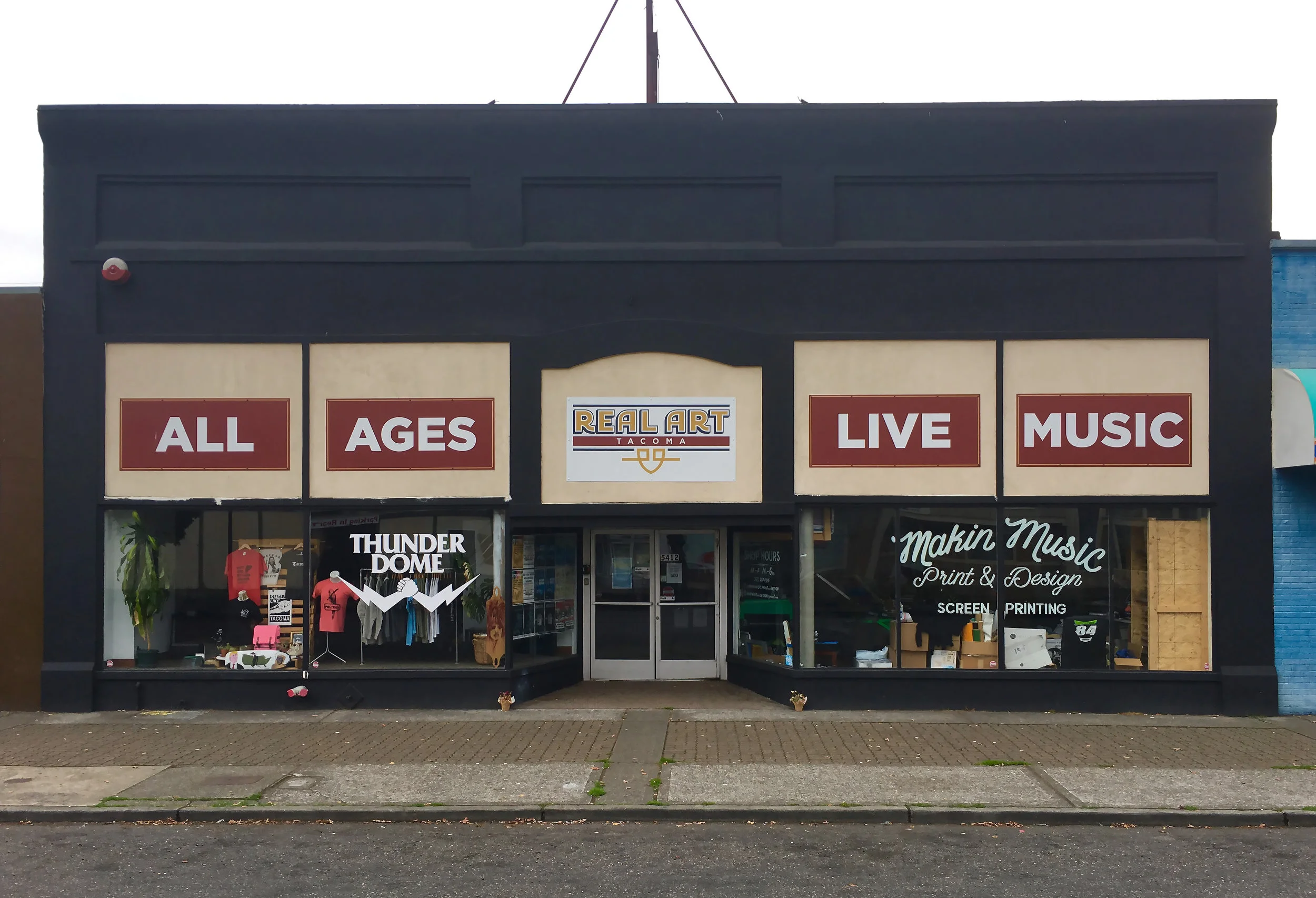
On an Instagram post reacting to the closing of music venues in the area on Oct. 29, RAT admitted that the venue has been experiencing low attendance at all their music events. Something that they acknowledge is due to rent increasing for all and the economy’s terrible state. To help increase attendance, they have maintained ticket prices low as possible and offered student discounts to counter unaffordability in Tacoma and stay open. However, just like The Crocodile they haven’t found success.
RAT also highlights the fact that if the local music continues to shrink and disappears, it will negatively impact how many national and internationally hyped musicians come to perform in Washington.
“Go to shows, get involved in the scene, watch every band, and buy merch,” RAT says on Instagram.
At the end of the census, WANMA offers legislative solutions policymakers could do to save the music scene which would help secure thousands of jobs and help the state maintain its internationally known music culture.
One of the suggestions is for the government to create a creative income stability fund that would provide financial support to music workers during the low-work months. Similar to what New York’s Creatives Rebuild New York did to counter the massive artist unemployment the state faced for three years by the pandemic.
Additionally, WANMA encourages policymakers to create a cultural investment in the state’s music industry like placing it under the City Admissions Taxes, County Admissions Taxes, and Lodging Taxes, which are connected to tourism.
“A key step would be legislation authorizing a uniform Cultural Access admissions surcharge of 1–2% on event tickets. Removing exemptions for large professional sports facilities would ensure fairness across all cultural sectors. The resulting revenue would be directly tied to cultural participation, growing alongside the sector itself,” the census states.
Mathis agrees with WANMA that policymakers need to find a solution to help, but she encourages policymakers to also fund art community organizations to allow them to continue creating performance opportunities for musicians and industry workers while providing support in promoting local musicians.
It is their duty to find a sustainable way to support an industry that helped create the state’s culture and identity. The duty to save doesn’t rely on just the community attending shows, it is a joint duty policymakers need to pitch in as well.
To help with the music scene you can find local shows through local venues like Real Art Tacoma’s website and through local music organizations. You can also help WANMA by supporting their work and sharing their census findings with local policy makers.