
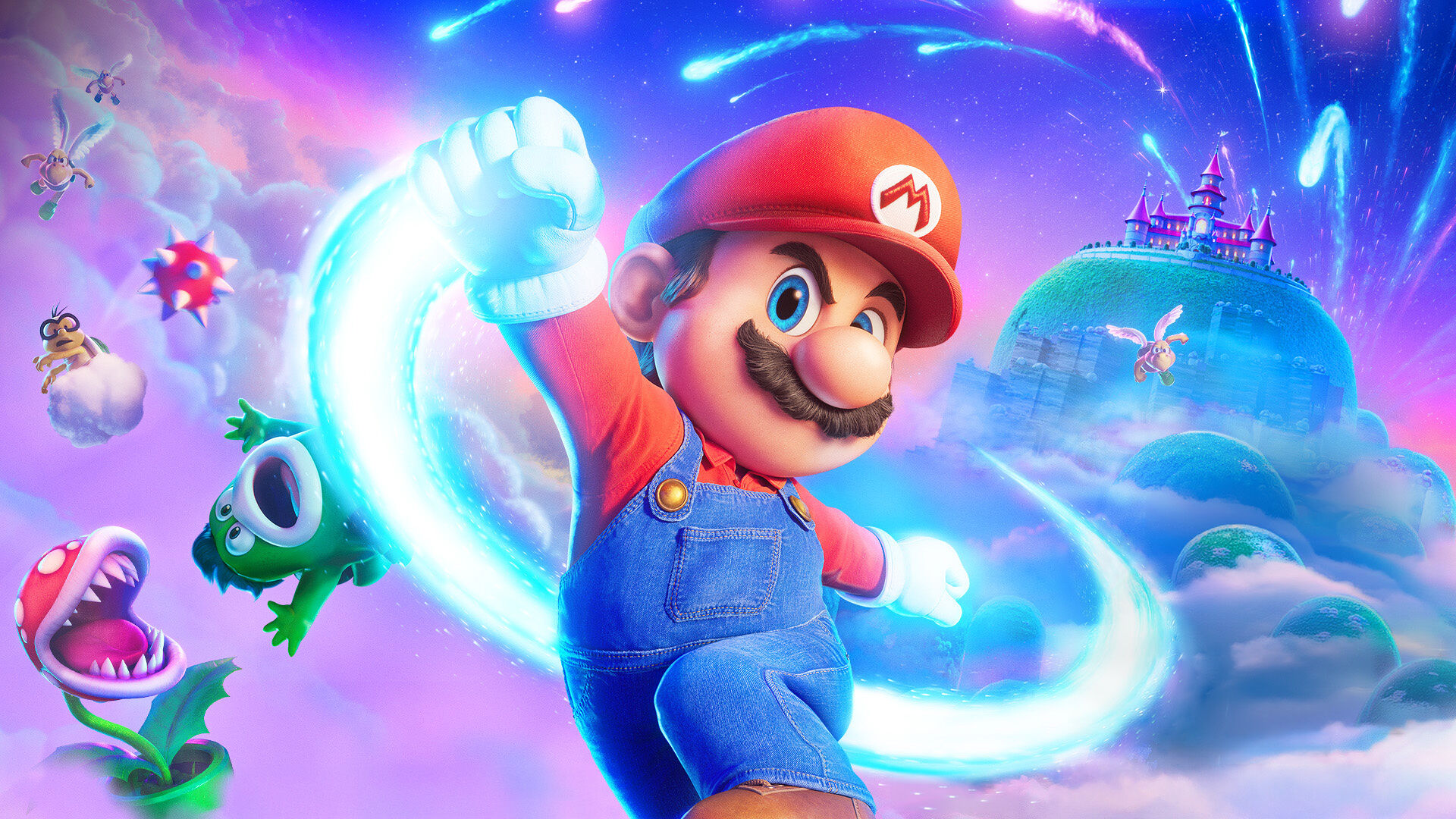
‘Super Mario Galaxy’ entertains, but misleading marketing holds it back
Illumination’s sequel builds a more entertaining Mario adventure, but its title and marketing suggest a story the film never fully tells.
By M.J. Cameron
On April 1, Illumination released “The Super Mario Galaxy” as a sequel to 2023’s “The Super Mario Bros. Movie.” The sequel brings back much of the original main cast, including Chris Pratt as Mario, Charlie Day as Luigi and Jack Black as Bowser, while introducing three new central characters.
The film adds Rosalina, Bowser Jr. and Yoshi, voiced by Brie Larson, Benny Safdie and Donald Glover. It also includes smaller cameos that nod to Nintendo and Mario fans, including Birdo, Pikmin and a popular fox character voiced by Glen Powell.
Video game adaptations, whether films, television series or live-action projects, have long been difficult to pull off. The main challenge is condensing stories that can take players 10 to 20 hours to experience into a film that runs about two or more hours, often missing much of the original narrative depth.
“The Super Mario Galaxy” is not a bad movie, but it does have a major flaw. From the perspective of a longtime Nintendo fan, the sequel is more entertaining than the first film, and two of its three major new characters receive meaningful development.
Yoshi is one of the film’s highlights. From his humorous backstory in Brooklyn to his iconic “Yoshi” delivery, he fits naturally alongside the Mario brothers and feels as though he has always been part of the group.
Bowser Jr. introduces a more emotional dynamic through his relationship with Bowser. The film explores Bowser’s insecurities of whether he was a good father, while Bowser Jr. searches for him after Bowser’s capture at the end of the first movie. At times, Bowser Jr. comes across as more tactical, sinister and destructive than his father.
Rosalina, however, falls short of expectations, and that is where the film’s biggest problem begins. The title, “The Super Mario Galaxy,” is misleading because the movie pulls from a few Nintendo and Mario titles, including Yoshi’s Island, Pikmin and Super Mario World. Drawing from multiple games is not the issue on its own, but the marketing suggested the film would more closely follow the lore of “Super Mario Galaxy.”
That disconnect is clearest in the film’s treatment of Rosalina. As a central figure in the Super Mario Galaxy games, Rosalina carries much of the emotional and narrative weight of that story. Despite being featured heavily in the trailers, she is barely present in the movie, and the depth associated with her character in the games never fully appears on screen.
The same problem extends beyond Rosalina to the film’s setting. A movie named after Super Mario Galaxy would seem to promise a stronger sense of interplanetary adventure, but the galaxy itself feels underdeveloped. Honey Hive Galaxy, featured in the original game, is the only recognizable world from the source material that Mario, Luigi, Yoshi and Bowser visit. Even then, the sequence is brief and gives little time to explore the setting or its connection to the game, making the title feel even more misplaced.
The movie is difficult to judge because it lands somewhere in the middle. It is not a terrible adaptation, but it is not fully satisfying either. Much of that disappointment comes from the marketing and title, which set up expectations for a different kind of story.
If Illumination had presented the film more as The Super Mario Bros. 2 or as a broader Super Mario World adaptation, the reaction to its plot and character development may have been far more positive despite its high box office.