Tacoma and Seattle protests follow US military operation in Venezuela
Rallies and marches followed the announcement of a U.S. operation targeting Venezuela’s leadership.
By M.J. Cameron
On the morning of Jan. 3, the U.S. launched military strikes on Venezuela’s capital, Caracas, and surrounding areas, in an operation named Absolute Resolve. President Donald Trump announced that U.S. forces captured Venezuelan president Nicolás Maduro and his wife, Cilia Flores.
Venezuelan government officials condemned the attacks as a violation of international law and a threat to regional peace. Supporters of the Bolivarian Revolution described the U.S. action as an attempt to undermine a decades-long political movement aimed at reducing American influence in Venezuela and across Latin America.
The operation marked the latest in a history of U.S. involvement in Venezuelan politics. In 2002, a U.S.-backed coup briefly removed President Hugo Chávez from power before he was reinstated less than two days later following resistance from loyal military forces and civilians.
Reactions to Maduro’s removal were divided, with some expressing support for the action and others criticizing it as a violation of international law.
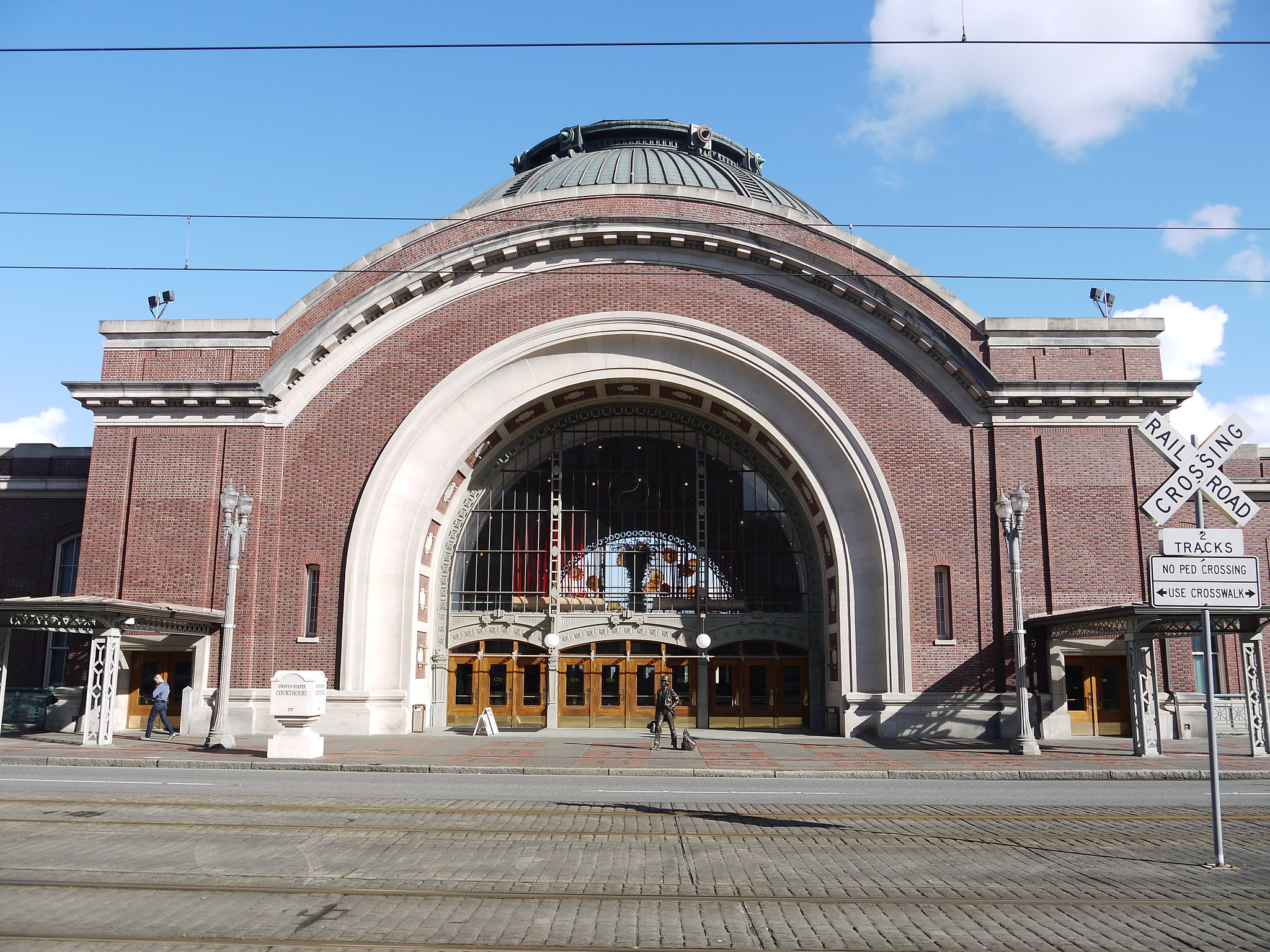
Less than 24 hours after the attack, over 70 people gathered at the steps of Tacoma’s U.S. District Courthouse that afternoon to protest the military operation. The emergency rally was organized by Tacoma’s chapter of Democratic Socialists of America (DSA) and was one of several demonstrations held nationwide.
DSA’s values of anti-imperialism and climate action motivated them to organize the rally and show support for the Venezuelan working class. Sean Arent, DSA’s outreach coordinator, delivered a statement of purpose.
“Today was the final escalation for us,” Arent said. “We knew that we needed to reach out to our community and do something to show public opposition.”
Protest activity continued the following day, when nearly 100 people gathered in downtown Tacoma to hear speakers from community organizations before marching to Tollefson Plaza and blocking an intersection near the Tacoma Art Museum. Organizers described the protest as a larger mobilization than previous demonstrations.
In Seattle, protesters gathered along the waterfront, waving signs and chanting slogans opposing the operation. Several demonstrators argued that the military action violated U.S. law.
“By law, you can’t do that,” Seattle demonstrator Beatriz Hofmann said. “You have to talk to Congress.”
Several Washington lawmakers agreed, Reps. Pramila Jayapal and Emily Randall released statements denouncing the U.S.’s actions.
“The world is watching as Trump illegally stokes the fires of war for his own personal gain,” Rep. Randall stated.
Protesters also expressed concern that the operation was driven by economic interests, particularly with Trump’s plans to tap into Venezuela’s oil reserves, a topic he discussed in a press conference shortly before the protests. This raised concerns among many about the motivations behind the invasion.
Protests in Tacoma and Seattle were among several demonstrations held across the country following the U.S. military action. Participants organized rallies, marches and public statements to oppose the intervention and call for an end to U.S. involvement in Venezuela.