
Tacoma City Council votes to increase restrictions on urban camping — just before winter
Winter comes fast in Tacoma, and our City Council moves to find urban camping punishable, taking the belongings and sometimes shelter of hundreds right before the rainy season.
By Rae Watkins
Winter comes quickly in Tacoma. The weather can go from sunny and 70 degrees to wet, cold and miserable overnight. But for Tacoma City Council, no weather is too cold to consider houselessness a crime.
On Oct. 21, Tacoma City Council voted to pass an expansion of their existing camping ban Ordinance 28831. This bill, passed in 2022, made it illegal to reside or store belongings, vehicles and other property within certain distances of emergency housing and public waterways. This new expansion adds new restrictions, making camps illegal within 2 blocks of libraries, parks and K-12 schools.
Ideally, this bill gives unhoused people resources through the HEAL program, which connects people to resources and assistance. Once an encampment is reported, a team from the HEAL program conducts a sweep. This sweep involves confiscating all property and offering an extension of information about access to resources, though it should be noted that direct access to these resources is not provided.
“Tacoma City Council has claimed over 9 million pounds of debris from this method. The HEAL team was created to deliver information and guide unhoused people to services or a shelter so they can eventually become housed,” said Terrell Stalworth, ASUWT City Liaison. “However, the vast majority of unhoused people who are approached this way don’t take services. In the first 9 months of 2025, only 14% of unhoused people contacted by the HEAL team were placed into shelters.”
As state funding for social programs is reduced, Tacoma finds itself with fewer and fewer resources for unhoused and low-income families. Rather than investing in social programs, rehabilitation and shelter beds, this bill allows for people who are already at risk to have their entire collection of possessions, including their vehicle, taken from them with little to no notice. This makes it harder for people to establish routines and puts them further from resources and shelters.
Tacoma City Council saw a room full of testimony from their constituents against the bill, but instead of considering the numerous pleas to listen and invest in support rather than relocation, Tacoma Councilmembers passed the bill by only one vote.
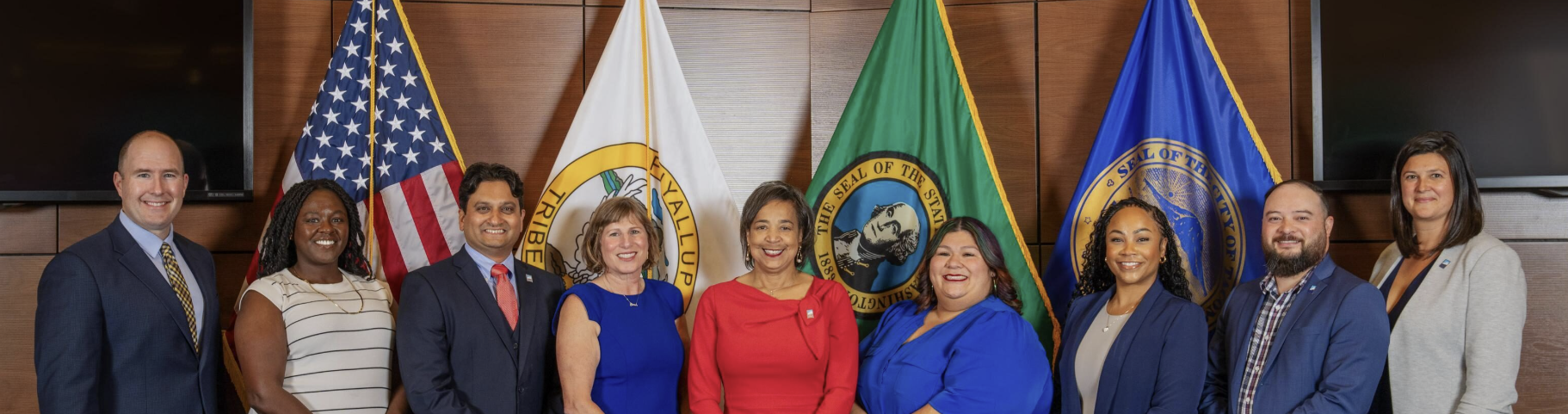
John Hines, who has proposed and voted in favor of both this and the previous ordinance, was supported by Sarah Rumbaugh, Kristina Walker, Sandesh Saldage and Mayor Victoria Woodards. The four who opposed this ordinance were Jamika Scott, Joe Bushnell, Olgy Diaz and Kiara Daniels.
“While the unhoused population will greatly be affected by this policy, it is also a concern for students due to the fact that students are at a higher risk of homelessness,” said Terrell. “Our campus is also in the middle of downtown where the camping ban is enforced making it so that students who become homeless in the downtown area will legally be forced to move.”
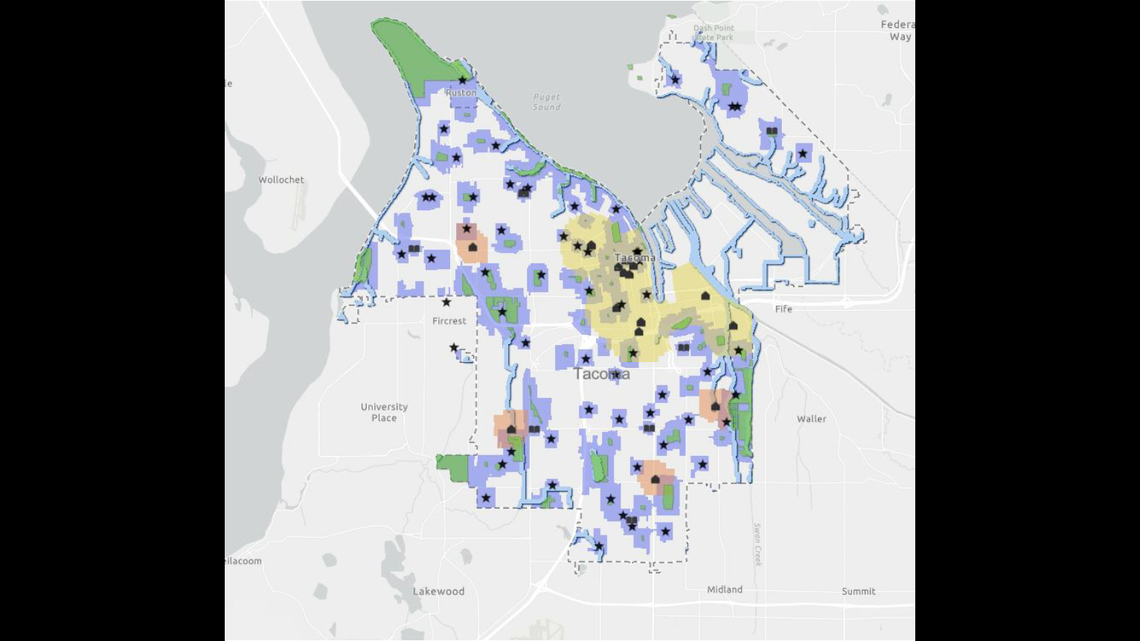
The map above shows the 10 block camping ban, including all of housing hilltop. Places where camping is now illegal are highlighted in yellow.
It becomes clear when looking at the proceedings that reducing homelessness is not the main goal. Reducing the look of homelessness appears to be much more immediate.
Maintaining sweeps and the resources to remove someone’s every worldly possession, including their car, which may be their only source of shelter, takes millions of taxpayer dollars and produces no long-term solutions that solve houselessness.
“While I recognize the city’s intent to address the homelessness issue in Tacoma, this policy does not solve the underlying causes of homelessness, nor does it lead to improving homeless individuals’ situations,” Terrell said.
Terrell added, “this policy leads to further marginalization of our vulnerable populations by uprooting them and making their existence simply illegal. Homelessness is a policy issue and passing policies that deal with the symptoms instead of the cause cannot be the solution.”
For an electable position, listening to your constituents is the most important part of the role. If Tacoma City Council is determined to see a room full of testimony and vote against it, their negligence will not go unnoticed.
This year alone, Pierce County has seen an 11% rise in unhoused individuals from 2,661 to 2,955. While it’s difficult to keep track of the health and mortality, Tacoma Weekly writes that nearly 300 people died homeless in 2023. With restrictions only tightening, this bill condemns hundreds of people to death as winter months approach, without replacing shelter beds, investing in mental health or harm reduction services or considering the lives of the hundreds to be displaced.
Students who may live locally and find themselves affected by houselessness will be forced to move further from campus and resources. But UW Tacoma remains a space where students can access resources for housing and food insecurity through the Office of Student Advocacy and Support , as well as emergency funding for times of crisis. Please reach out to your campus resources if you find yourself in need.